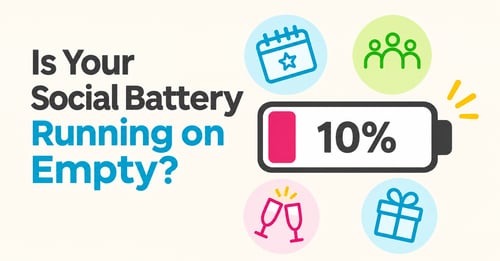
TL;DR: Feeling drained after socializing? Your social battery might need a recharge. Learn how to spot social exhaustion, recognize when you need alone time versus connection, and set healthy boundaries during the busy holiday season.
 Your calendar is filling up. Work parties, family gatherings, holiday dinners, gift exchanges, and that annual get-together you somehow forgot about until the invitation showed up.
And it's only November.
The holidays are supposed to be a time for connection, but sometimes all that togetherness can leave you feeling completely wiped out. You might genuinely enjoy spending time with friends and family, yet find yourself dreaming about going home, putting on sweatpants, and talking to absolutely no one.
Sound familiar?
That's your social battery talking.
Just like your phone needs a charge after a long day, your brain sometimes needs a break from interacting with people. And with the holiday season approaching, knowing when to socialize and when to take a little downtime can make a big difference in how you feel.
Here's how to recognize the signs of social exhaustion, understand why some interactions drain you while others lift you up, and keep your social battery from hitting zero this holiday season.
Why Does Socializing Sometimes Feel So Exhausting?
Here's the funny thing about socializing. The same activity that makes you feel happier and more connected can also leave you feeling drained.
Spending time with people you care about can improve your mood, strengthen relationships, and help you feel supported. Social connection is an important part of mental health.
But there's a difference between enjoying someone's company and having the energy to keep socializing.
Think about a typical workday. You might spend hours in meetings, answer questions from coworkers, make small talk in the break room, and handle a few difficult conversations.
By the time you get home, the last thing you want to do might be talk.
Now add holiday shopping, family obligations, school activities, and weekend parties. It's easy to see why your social battery might need a little extra charging.
Certain situations can be especially draining, including:
- Large gatherings with lots of conversations happening at once
- Networking events where you don't know many people
- Spending time with people who require extra emotional energy
- Back-to-back social commitments without much downtime
- Feeling pressure to be cheerful or outgoing when you're tired
- Social events after a stressful day at work
Of course, the opposite can happen, too. A quick coffee with a close friend might be exactly what you need after a rough week. The trick is figuring out which kind of interaction helps you feel better.
7 Signs Your Social Battery Is Running Low
Social exhaustion doesn't always announce itself. Sometimes it shows up as irritability, trouble concentrating, or a sudden desire to cancel every plan you've made.
Here are a few signs that your social battery might need a recharge.
1. Small Talk Feels Like a Chore
Normally, you're happy to chat with coworkers or neighbors. But lately, even answering "How was your weekend?" feels like work.
You might find yourself giving shorter answers or avoiding conversations altogether.
2. You're More Irritable Than Usual
Little things that normally wouldn't bother you suddenly get under your skin. Someone asks one too many questions. A coworker stops by your desk to chat. Your phone buzzes with another group text.
You may simply be running low on patience because you're mentally tired.
3. You Start Dreading Plans You Were Excited About
Remember that holiday party you couldn't wait to attend? Now it's Friday afternoon, and you're secretly hoping it gets canceled.
When your schedule gets too full, even activities you enjoy can start feeling like obligations.
4. You Have Trouble Focusing
Social exhaustion can make it harder to concentrate, especially after a day filled with meetings, conversations, and interruptions.
You might find yourself rereading the same email or struggling to make simple decisions.
5. You Feel Relieved When Someone Cancels
You like your friends. You really do.
But when someone texts that they can't make dinner, your first reaction is relief. That's worth paying attention to.
6. You Need Quiet After Being Around People
After a busy day, you might crave silence, a walk alone, or an evening without plans.
Sometimes even watching television feels like too much stimulation.
7. You Feel Disconnected During Conversations
You're physically present, but mentally you've checked out. You might have trouble following conversations or find yourself wishing you were somewhere else.
If these feelings happen occasionally, they may simply mean you need some downtime. If exhaustion, withdrawal, or changes in mood persist or interfere with everyday life, consider talking with a healthcare professional.
Do You Need Alone Time or More Connection?
This is where things get interesting.
Sometimes you feel exhausted because you've been around too many people. Other times, you feel lousy because you haven't had enough meaningful interaction.
And the two can feel surprisingly similar.
You might be tired, unmotivated, or tempted to spend the entire weekend on the couch. But would staying home actually help you recharge, or would you feel better after catching up with a friend?
There's no perfect test, but a few questions can help.
|
You might need downtime if... |
You might need connection if... |
|---|---|
|
You've had several busy social days |
You've spent a lot of time alone |
|
Conversations feel overwhelming |
You miss talking with someone |
|
You're craving quiet and fewer demands |
You feel lonely or disconnected |
|
A night at home sounds genuinely relaxing |
Staying home is starting to feel isolating |
|
You feel better after some uninterrupted rest |
You usually feel better after seeing a friend |
One helpful question to ask yourself is: Will this activity leave me feeling better or more depleted?
You won't always know the answer in advance. But the more you pay attention to how different interactions affect your mood, the easier it becomes to recognize what you need.
And remember, connection doesn't have to mean attending a crowded party. A phone call, a walk with a friend, or lunch with a favorite coworker can be enough.
How to Recharge Your Social Battery During the Holidays
You probably can't avoid every holiday gathering, office celebration, or family dinner. And you wouldn't necessarily want to.
But you can make a few changes to keep your social calendar from wearing you out.
Here are seven ways to protect your energy while still enjoying the season.
1. You Don't Have to Say Yes to Every Invitation
Holiday invitations have a way of piling up. There's the office party, your neighbor's open house, the annual cookie exchange, and three different family celebrations.
And let's be real, some invitations come with a side of guilt. Maybe a relative makes you feel bad for skipping Thanksgiving dinner, or someone reminds you that "everyone else is coming."
Before automatically saying yes, take a look at your calendar. Which events are you genuinely looking forward to? Which ones feel more like obligations?
It's okay to decline an invitation, even when you don't have another commitment. You can love your family and still need some space.
And if someone gives you a guilt trip? Be kind, but stick with your decision. You don't owe anyone a lengthy explanation for needing a little downtime.
2. Build Recovery Time Into Your Calendar
If you know Saturday is going to be packed with holiday activities, try keeping Sunday relatively open.
Give yourself time to sleep in, read a book, go for a walk, or do whatever helps you unwind. And don't forget about smaller breaks during the workday. Even 10 minutes away from your desk can provide a welcome change of pace.
The goal is to avoid filling every available hour with something you have to do.
3. Choose Quality Over Quantity
You don't need to attend five holiday parties to feel connected. Sometimes one meaningful conversation with a good friend is more satisfying than an entire evening of small talk.
Instead of trying to see everyone, focus on the people who make you feel comfortable and supported. Maybe that means skipping a large gathering and inviting a friend over for coffee instead.
A smaller social calendar can still be a fulfilling one.
4. Give Yourself Permission to Leave Early
Who decided that attending a party means staying until the very end? If you're feeling drained, it's perfectly fine to head home. You can show up, enjoy yourself for an hour or two, and leave before you're completely exhausted.
Setting expectations ahead of time can help, too. Let your host know you have an early morning or can only stay for a little while. You might even enjoy the event more when you know you're free to leave whenever you're ready.
5. Take a Break From Your Phone
Here's something we often forget: Socializing doesn't stop when we get home.
Group texts, social media, work messages, and endless notifications can keep us mentally engaged long after the day is over. If you're feeling overwhelmed, try putting your phone on Do Not Disturb for an hour.
You don't have to respond to every message immediately. Those holiday group chats will still be there tomorrow.
6. Make Room for the People Who Recharge You
Not every social interaction drains your battery. Some people have a way of making you feel better, even when you've had a terrible day.
Maybe it's the coworker who always makes you laugh or the friend you can sit with in comfortable silence. Pay attention to those relationships.
When you're feeling overwhelmed, a little time with someone who makes you feel understood might be exactly what you need.
7. Check In With Yourself Before Making Plans
Before accepting another invitation, ask yourself how you're actually feeling. Are you excited to go? Do you have the energy? Have you had enough downtime lately?
Your answer might change from week to week, and that's normal. Some weekends you'll want to be surrounded by people. Other weekends, staying home with takeout and a good movie will sound pretty wonderful.
Both can be good for your well-being.
What About Social Exhaustion at Work?
The holiday season can be especially busy in the workplace.
Between year-end deadlines, team lunches, office parties, and the usual daily responsibilities, employees may find themselves with very little breathing room.
For HR and wellness professionals, this is a good time to remember that workplace connection looks different for everyone. Some employees love company celebrations. Others would rather skip the large gathering and connect with coworkers in smaller groups.
A few simple ways to support employees' social well-being include:
- Make holiday activities optional. Employees shouldn't feel pressured to participate in every celebration.
- Offer different ways to connect. Consider small team lunches, volunteer opportunities, or casual coffee breaks alongside larger events.
- Respect quiet time. Encourage employees to take uninterrupted breaks, especially during busy periods.
- Be mindful of meeting overload. Back-to-back meetings can leave employees mentally exhausted before the workday is over.
- Ask employees what they enjoy. Don't assume everyone wants another party or team-building activity.
A healthy workplace encourages connection while recognizing that employees have different social needs. And sometimes the best holiday gift you can give your team is an afternoon without another meeting.
Can Too Much Alone Time Be Bad for You?
Absolutely. While downtime is healthy, spending too much time disconnected from others can affect your mental and physical health.
According to the U.S. Surgeon General's advisory on loneliness and isolation, social connection plays an important role in our overall health. The advisory reports that lacking social connection is associated with a 29% increased risk of heart disease and a 32% increased risk of stroke. That's a pretty good reminder that relationships matter.
But there's an important distinction between choosing to spend time alone and feeling lonely.
Solitude can be restorative when it's something you enjoy. Loneliness happens when the connection you have doesn't match the connection you want. You can feel lonely in a crowded room. You can also spend an entire weekend alone and feel perfectly content.
If you've been avoiding people for weeks, feeling increasingly isolated, or losing interest in activities you normally enjoy, it may be worth checking in with someone you trust or a mental health professional.
Sometimes recharging means taking a break from people. Other times, it means reaching out.
Your Social Battery Doesn't Have to Be at 100%
Here's something worth remembering as the holidays approach: You don't have to show up to every gathering, make conversation with everyone, or be the life of the party.
And you don't have to spend the entire season hiding from invitations, either. There's plenty of room somewhere in the middle.
Maybe you attend the office holiday party but skip the after-party. Maybe you host a small dinner instead of a big celebration. Or maybe you spend Friday night at home so you're ready to enjoy Saturday with friends.
The important thing is paying attention to what makes you feel good.
This holiday season, give yourself permission to enjoy the people you love and take a break when you need one.
Your social battery will thank you.