

BlogHeader-1


Lisa Stovall

With over two decades of experience in employee wellness and internal communications, Lisa Stovall brings her passion and expertise to every project as a senior content writer, strategist, and editor at TotalWellness. Equipped with a Master’s in Health Promotion, she’s all about creating workplaces that are healthy, happy, and thriving. When she’s not at work, Lisa loves getting her 10,000 steps in — whether it’s a stroll through the park, exploring new trails, or enjoying a neighborhood walk with her two dogs. For Lisa, health and wellness are not just her career, but a personal passion she brings to life with vibrant energy and a fun approach that makes her a trusted voice in the wellness community.
Find me on:

Recent Posts

What Does Employee Wellbeing Actually Look Like at Work?

Posted by Lisa Stovall on Mon, Aug, 03, 2026

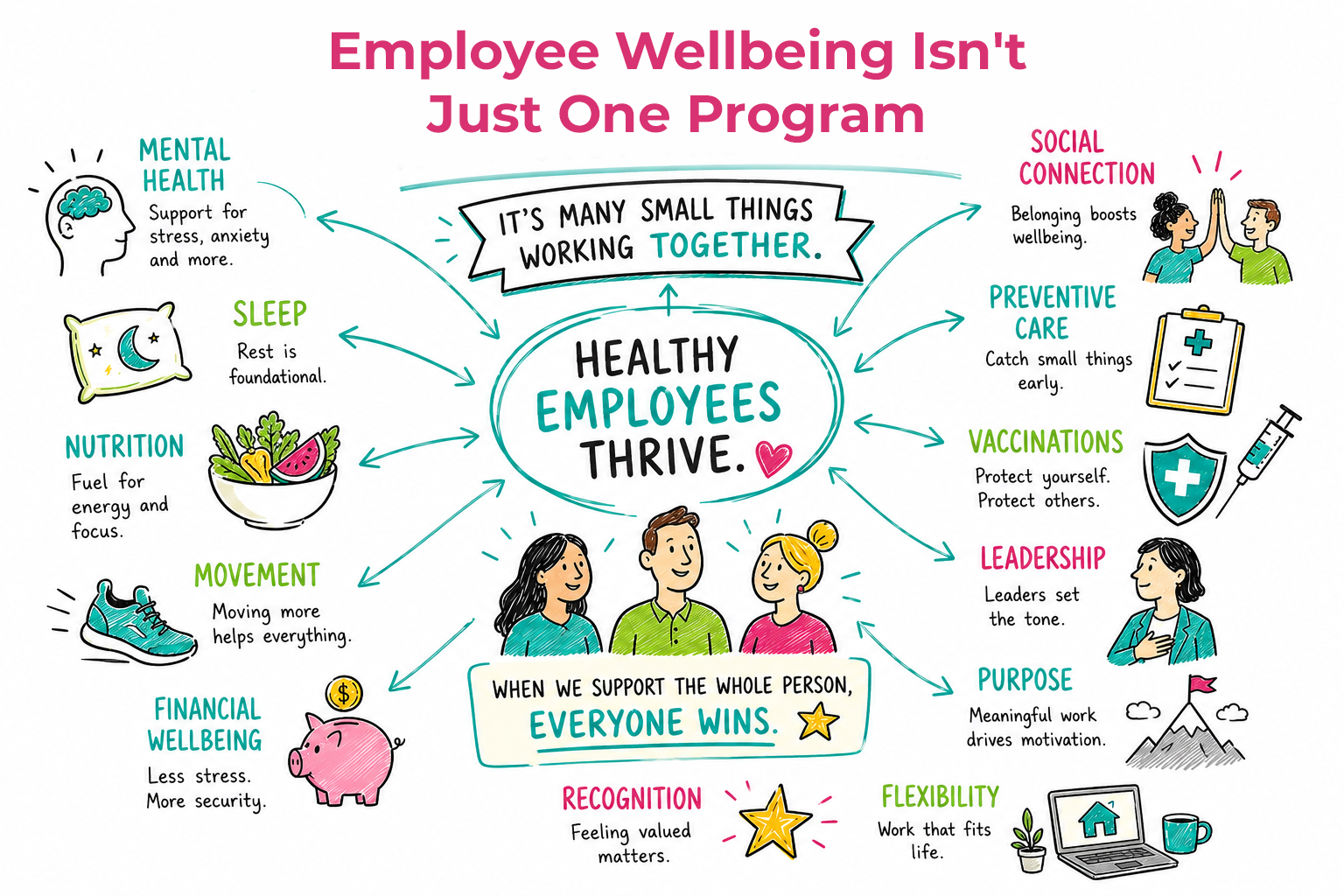
TL;DR: Employee wellbeing isn't built through one program. It's created by many small, connected efforts — from mental health and movement to leadership, recognition, and preventive care — that support the whole person. When these pieces work together, employees and organizations both thrive.


Ask five people what "employee wellbeing" means, and you'll probably get five different answers.

One person thinks gym discounts. Another thinks mental health days. Someone in finance is thinking about retirement matching, and someone in HR is thinking about all of the above, plus about ten things nobody mentioned.

They're all right, actually. That's kind of the point.

Wellbeing isn't a single line item you can check off with one program or one perk. It's a web of overlapping factors, and when one piece is missing, the rest of the picture gets harder to see. A company that nails free snacks and step challenges but ignores financial stress or bad management is still going to have burned out, disengaged employees. The pieces have to work together.

Below, we break down what actually makes up employee wellbeing, and why treating it as one program instead of a whole ecosystem is where a lot of workplace wellness efforts fall short.

Read More

Topics: Healthy Workplaces

Calm Kit: How to Build One for Stress & Anxiety Relief

Posted by Lisa Stovall on Mon, Jul, 27, 2026

TL;DR: A personalized calm kit filled with simple, healthy coping tools can help you feel more grounded and prepared when stress or anxiety shows up.


Most of us leave home with the essentials: phone, keys, wallet.

But what if you also carried a few things that helped you feel calmer during a stressful day?

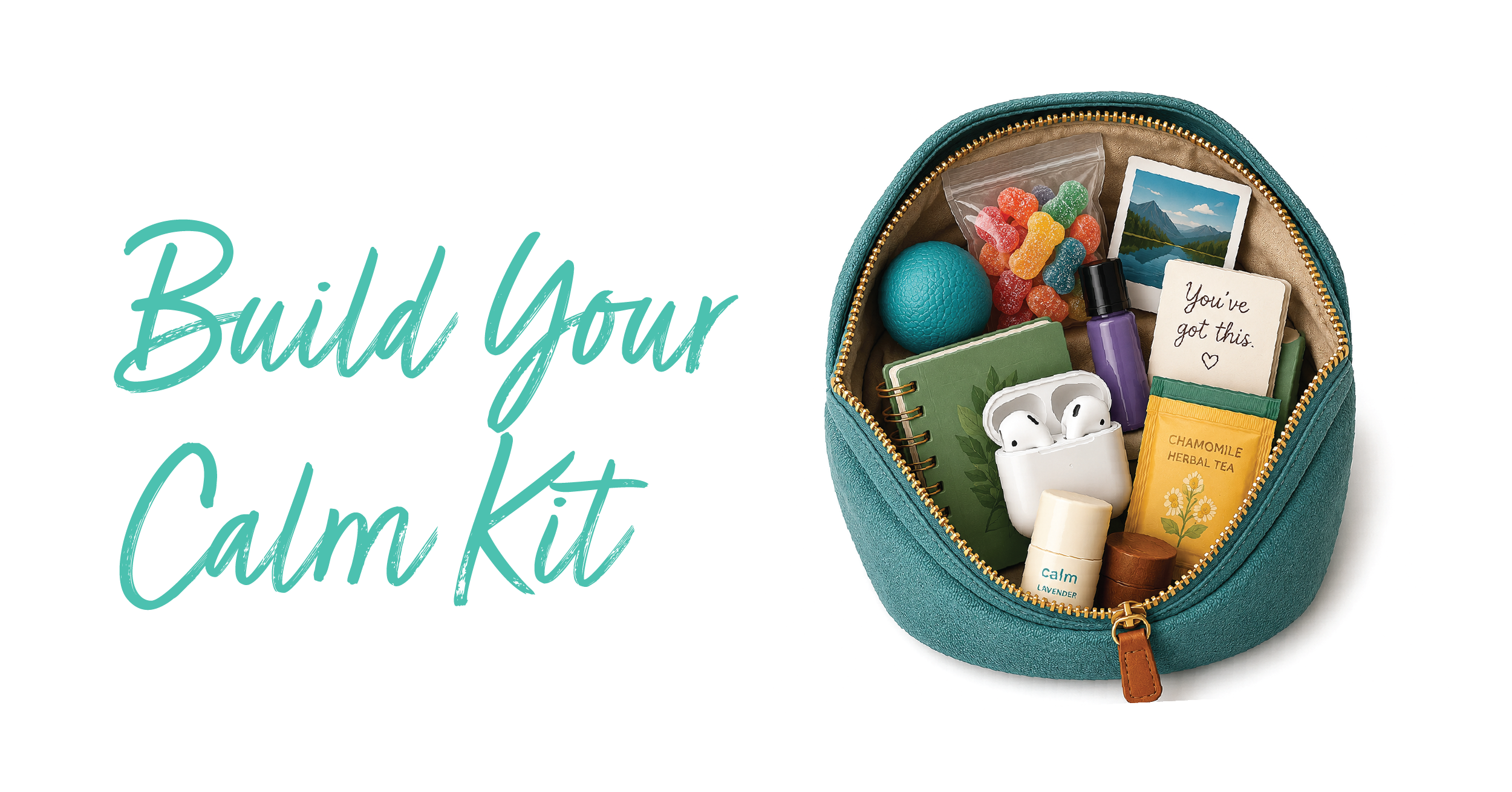
That's the whole idea behind a calm kit. Picture a small stash of items in your bag, your desk drawer, or your car console, ready to help you reset the moment stress starts creeping in. You may have also seen these referred to as "panic pouches" or "anxiety pouches," names that have picked up steam on social media and in recent news coverage. Whatever you call it, the concept itself is surprisingly practical: instead of waiting until you're overwhelmed, you prepare for stressful moments ahead of time.

Think of it like a first-aid kit, but for your emotions instead of your cuts and scrapes.

Below, we'll cover what a calm kit actually is, why it works, and how to build one that fits your life, whether that's a hectic office, a long commute, or a house full of kids.

Read More

Topics: Healthy Workplaces

The Health Effects of Employee Recognition

Posted by Lisa Stovall on Mon, Jul, 20, 2026

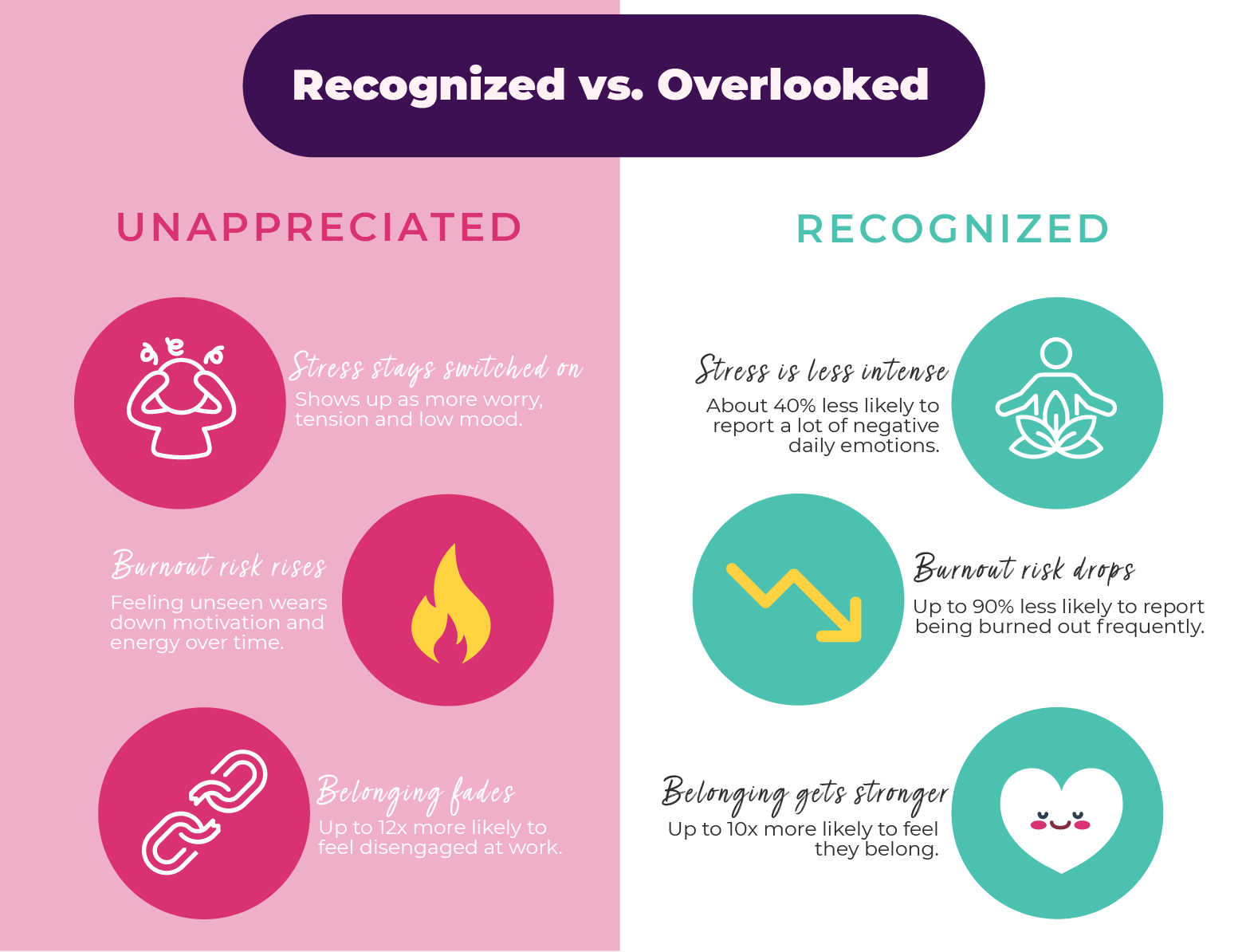
TL;DR: Feeling appreciated at work isn't just nice, it's healthy. Employees who feel genuinely recognized burn out less, stress less, and stick around longer. But it only works when it's specific and consistent, not a once-a-year plaque or a generic email blast.


Everyone wants to know their work matters. But when you keep showing up, doing your job, and hearing nothing, it starts to wear on you.

At first, it’s frustrating. Then you stop trying as hard. You second-guess yourself. You wonder if anyone would notice if you weren’t there.

That kind of stress doesn’t always stay at work. It follows you home. It affects your mood, your sleep, and eventually your health.

Real recognition can make a difference. Not canned praise or an employee-of-the-month email — just someone paying attention and saying, clearly, “I saw what you did. It mattered.”

In this post, we’ll explore how recognition can affect employee health, why so many workplace appreciation efforts miss the mark, and what meaningful recognition looks like when it’s done well.

Read More

Topics: Healthy Workplaces

Why Your Beliefs Matter More Than You Think

Posted by Lisa Stovall on Mon, Jul, 13, 2026

TL;DR:The stories you tell yourself often become the beliefs that shape your actions, relationships, and resilience. The good news? Beliefs aren’t fixed. By recognizing limiting beliefs and practicing simple exercises to challenge them, you can build a healthier mindset and respond to life’s challenges with greater confidence.


Every day, your brain tells thousands of tiny stories.

“I’m not good at presentations.”

“Nothing I do makes a difference.”

“This week is going to be a disaster.”

Those thoughts may seem like passing commentary, but your brain is paying closer attention than you think.

The stories you repeat to yourself often become beliefs. And those beliefs quietly shape how you respond to challenges, build relationships, handle setbacks, and even decide whether something is worth trying in the first place.

That’s the idea behindThe Power of Beliefs, a new book by positive psychology researcher Shawn Achor. In a recent conversation with Mark Williamson of Action for Happiness, Achor shared the science behind why our beliefs matter so much — and, more importantly, how we can change the ones that are holding us back.

Here’s what the research says and a few simple ways to put it into practice at work and at home.

Read More

Topics: Healthy Workplaces

How to Make Wellness Feel Easier, Not Like Another Task

Posted by Lisa Stovall on Mon, Jul, 06, 2026

Wellness is supposed to help you feel better, not make you feel like you’re falling behind.

But somewhere between tracking your steps, drinking more water, getting enough sleep, eating more vegetables, stretching, meditating, journaling, meal prepping, and trying to manage stress, wellness can start to feel like a second job.

And, that kind of defeats the purpose.

When every healthy habit feels like another item on your to-do list, it’s easy to feel overwhelmed before you even start. You might know what would help. You might even want to do those things. But when life is already full, even simple habits can feel heavy.

That doesn’t mean you’re unmotivated or doing wellness wrong. It may just mean your approach needs to feel more realistic, more flexible, and a whole lot less all-or-nothing.

This post will walk through why wellness starts to feel like a chore in the first place, and what you can actually do to make it feel lighter, easier, and more like something you want to do instead of something you have to do.

Read More

Topics: Wellness at Work

Five-Minute Wellness Activities for Meetings

Posted by Lisa Stovall on Mon, Jun, 29, 2026

TL;DR: Five-minute wellness activities make it easy to add small, meaningful moments of well-being to the workday. By building quick breaks into meetings, employers can help employees pause, reset, move, connect, and refocus without adding another big task to the calendar.


Meetings have a reputation.

They run long. They multiply mysteriously. They somehow turn “quick sync” into 47 minutes of  regret.

But meetings don’t have to drain the life out of the workday. In fact, with the right reset, they can become a simple opportunity to help employees pause, breathe, stretch, laugh, refocus, and reconnect.

That’s where five-minute wellness activities come in.

These quick activities don’t require a big budget, fancy equipment, or a full wellness committee strategy session. They’re short enough to fit at the beginning, middle, or end of a meeting, but meaningful enough to shift the energy in the room.

Whether your team needs a mental reset, a movement break, a little stress relief, or just a moment to feel human again, these five-minute ideas make workplace wellness feel easy, approachable, and doable.

Read More

Topics: Healthy Workplaces

Want Better Wellness Program Results? Start With Your Managers

Posted by Lisa Stovall on Mon, Jun, 22, 2026

TL;DR:Employees take their cues from managers. When leaders participate in wellness initiatives, encourage healthy habits, and model well-being, employees are far more likely to engage. If you want better wellness program participation, start by getting managers involved.


You’ve launched the wellness challenge. You sent the emails. You offered incentives. Maybe you even brought in a new vendor or expanded your benefits.

Yet participation remains frustratingly low.

When that happens, most organizations look at the program itself. They tweak the rewards, add new activities, or increase communication. But often, the real issue isn’t the program.

It’s the managers.

Employees pay close attention to what their leaders prioritize. If managers skip the wellness challenge, never attend employee events, work through lunch, and answer emails late into the evening, employees notice. Those behaviors send a message about what is truly valued, regardless of what the wellness campaign says.

The opposite is also true. When managers participate, encourage healthy habits, and visibly make time for their own well-being, employees are far more likely to follow suit.

In other words, the success of your wellness program may have less to do with the program itself and more to do with the people leading your teams.

Here’s why manager involvement matters so much and what organizations can do to turn managers into their most powerful wellness champions.

Read More

Topics: Healthy Workplaces

Hidden Nutrient Deficiencies That Affect Energy, Mood, and Metabolism

Posted by Lisa Stovall on Mon, Jun, 15, 2026

You eat pretty well. You get some sleep. You drink water. So why do you still feel tired all the time, kind of blah, and like your body is just… running slow?

The answer isn’t always stress, aging, or a busy schedule. Sometimes, low energy, brain fog, mood changes, and a sluggish metabolism can be linked to nutrient deficiencies that often go unnoticed.

Hidden nutrient gaps don’t usually announce themselves with obvious warning signs. They don’t send you to the hospital or come with a dramatic diagnosis. Instead, they quietly affect how your body produces energy, regulates mood, supports metabolism, and performs everyday functions. Over time, even small deficiencies can leave you feeling less like yourself.

And they’re more common than you might think. Busy schedules, highly processed foods, restrictive diets, certain medications, and even chronic stress can make it harder to get the vitamins and minerals your body needs to thrive.

In this article, we’ll look at the most common nutrient deficiencies linked to fatigue, low mood, and metabolic changes, along with practical ways to identify potential gaps and support your overall health.

Read More

Topics: Wellness at Work

25 Workplace Wellness Challenge Ideas Employees Actually Want to Do

Posted by Lisa Stovall on Mon, Jun, 08, 2026

TL;DR: The best workplace wellness challenges are simple, fun, and easy to join. These 25 ideas can help employees build healthy habits, strengthen team connections, and create a more positive workplace culture.


Workplace wellness challenges have a reputation problem.

Many employees have participated in challenges that sounded great at first but quickly became another task on an already full to-do list. Maybe it was a step challenge that lost momentum after a week, a hydration tracker that nobody remembered to update, or a wellness app that employees downloaded once and never opened again.

The problem isn’t that people don’t care about their health. Most employees want more energy, less stress, and healthier habits. The problem is that too many wellness challenges feel disconnected from real life.

When wellness challenges are simple, social, and genuinely enjoyable, participation changes. Employees start talking about them, encouraging one another, and building healthy habits that extend beyond the challenge itself. The result is more than better health. It can lead to stronger team connections, improved morale, reduced burnout, and a workplace culture people enjoy being part of.

If you’re looking for fresh ideas, you’re in the right place. Below are 25 workplace wellness challenge ideas that are easy to launch, fun to join, and designed to create meaningful impact.

Read More

Topics: Healthy Workplaces

Affordable Ways to Take Care of Yourself

Posted by Lisa Stovall on Mon, Jun, 01, 2026

TL;DR: You don’t need to spend a lot of money to feel your best. True self-care comes from small, consistent choices that support your body, mind, and mood. Here’s how to do it — affordably.


Most people don’t skip self-care because they don’t care about their health. They skip it because they’re tired, busy, stretched thin, and trying to make everything else work first.

When your day is packed with meetings, emails, errands, kids’ activities, and constant notifications, self-care can start to feel unrealistic. And somewhere along the way, wellness got marketed as something that requires money, time, and a perfectly organized morning routine.

But real life usually doesn’t look like that.

Taking care of yourself doesn’t have to mean expensive supplements, spa days, or another subscription you forget to use. Sometimes it looks like taking a walk after dinner, drinking more water during the workday, sitting outside for 10 minutes, or finally going to bed before midnight.

This post breaks down simple, affordable self-care ideas that actually fit into busy schedules and real budgets.

Read More

Topics: Healthy Workplaces

EWBHeader

Subscribe

This Year's Most Popular Articles