
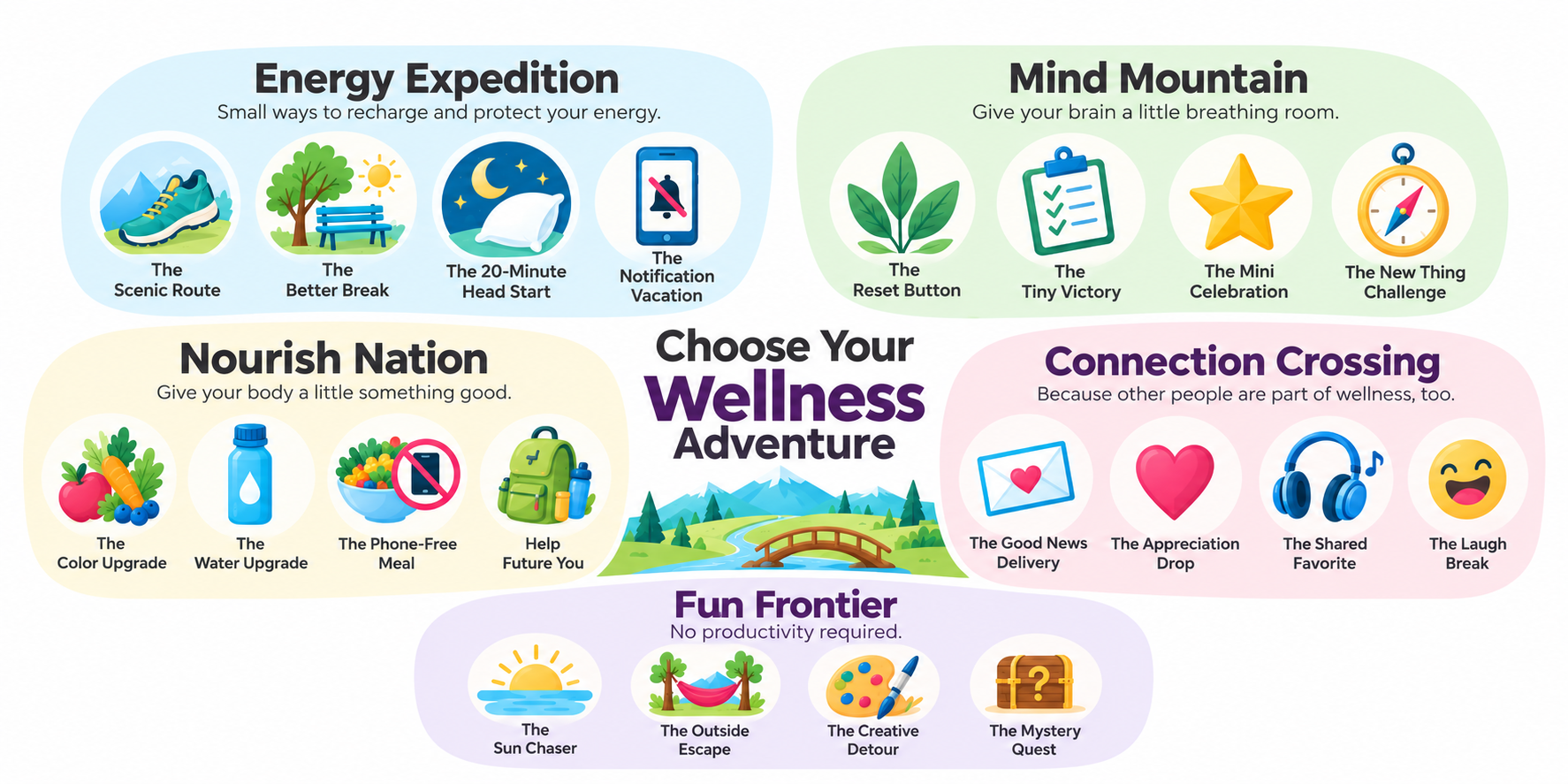
TL;DR: Wellness doesn't have to feel like another item on your to-do list. Choose from 20 simple wellness quests focused on energy, mental well-being, nutrition, connection and fun.
When did taking care of yourself become so much work?
Drink more water. Get enough sleep. Exercise. Meal prep. Meditate. Stretch. Call your friends. Reduce your screen time.
Suddenly, wellness has its own to-do list.
So we're trying something different.
Your mission: choose one wellness adventure this week.
We've created 20 small quests across five destinations: Energy Expedition, Mind Mountain, Nourish Nation, Connection Crossing and Fun Frontier.
There's no right path to take. Start wherever you want, choose a quest that sounds good and give it a try sometime this week. There's no streak to maintain, no leaderboard and definitely no requirement to complete them all.
Although if you're an overachiever, we're not going to stop you.
Pick your path. Choose your quest. Let the adventure begin.