
BlogHeader-1


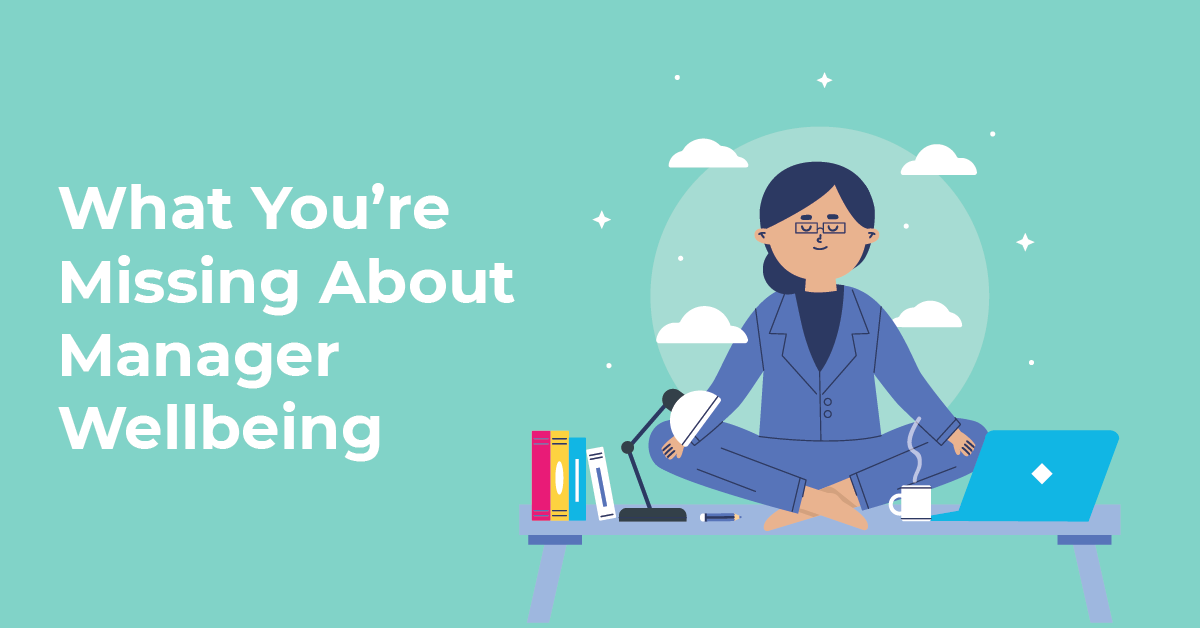
Why Manager Wellbeing Is the Most Overlooked Metric

Posted by Lisa Stovall on Mon, Mar, 30, 2026

TL;DR: Managers carry the emotional and operational weight of your organization, but most wellness strategies overlook them. When managers burn out, performance, engagement, and retention all suffer. Supporting manager wellbeing isn’t extra — it’s one of the highest-impact moves a company can make.


When companies invest in employee wellness, the conversation usually centers on frontline staff: stress management workshops, mental health days, EAP resources. But there’s a critical group being left out of that equation:managers.

Middle managers and team leads are quietly carrying one of the heaviest loads in any organization. They’re responsible for the emotional wellbeing of their direct reports, translating leadership decisions (even unpopular ones), mediating conflicts, hitting targets, and somehow keeping their own heads above water. And most wellness programs? They weren’t designed with managers in mind.

It’s time to change that.

Here’s why manager wellbeing deserves its own dedicated focus, and what HR leaders and executives can do about it.

Read More

Topics: Healthy Workplaces

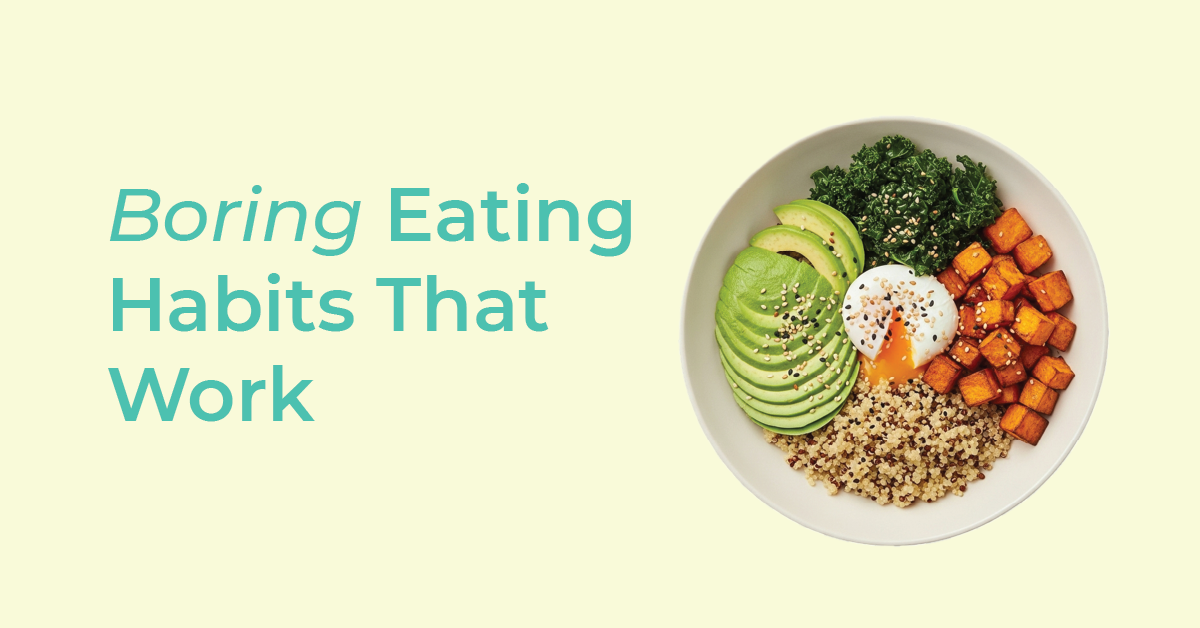
15 Boring Eating Habits That Actually Work

Posted by Lisa Stovall on Mon, Mar, 23, 2026

TL;DR: Simple habits beat extreme diets. Eat balanced meals, stay aware of what you’re eating and drinking, and focus on choices you can repeat consistently. 


Losing weight is hard.

It's physically, emotionally, and mentally demanding, and it looks different for everyone. Bodies are different. Histories are different. Stress, hormones, medications, sleep, work schedules, and life circumstances all play a role.

But the eating habits that actually work? They're kind of boring. No extremes, no overnight miracles, no white-knuckling through rules you secretly hate. Just simple, repeatable choices that don't demand attention but quietly do the work, day after day.

They won't make headlines and they won't wow your group chat. But they show up consistently, they stick, and over time they add up to something real. The least exciting habits are usually doing the most heavy lifting behind the scenes, and that's exactly where change tends to happen.

These are fifteen of them. Boring, useful, and actually doable.

Read More

Topics: Healthy Workplaces

12 Wellness Perks Small Companies Can Actually Afford

Posted by Lisa Stovall on Mon, Mar, 16, 2026

TL;DR: You don’t need a Silicon Valley budget to support employee wellbeing. Small companies can offer meaningful wellness perks by focusing on simple, affordable experiences employees enjoy. From healthy snack stations to mini stretch breaks and on-site screenings, these ideas help boost morale, reduce stress, and improve health without breaking the bank.


Big companies love to show off their wellness perks.

Nap pods.

Meditation rooms.

A smoothie bar staffed by a personal nutritionist.

Nice, right?

But if you run a small business, those things can feel out of reach.

You don’t need a massive budget to create a healthier workplace. Simple, affordable wellness perks can still boost morale, improve health habits, and help employees feel supported. In fact, even small wellness initiatives can increase productivity and employee satisfaction while reducing absenteeism and healthcare costs.

Let’s look at 12 on-site wellness perks small companies can actually afford.

Read More

Topics: Wellness at Work

How Sleep Deprivation Shows Up in Your Biometric Results

Posted by Lisa Stovall on Mon, Mar, 09, 2026

TL;DR:Most people know sleep affects how they feel. Fewer realize it shows up directly in their biometric screening results. Poor sleep raises blood pressure, disrupts blood sugar regulation, drives up cholesterol, and increases inflammation. 


You don’t feel exhausted. You’re functioning. You’re getting things done.

You just run on six hours most nights. Maybe less. You answer emails before the sun is up. You scroll for “just a few minutes” that turns into 45. You set your alarm with confidence that tomorrow will be different. 

That’s the problem.

Sleep is when the body repairs itself. It's when blood pressure drops, blood sugar stabilizes, inflammation cools, and hormones reset. When that window is cut short — night after night — those systems don't get to finish their work.

The result? Numbers at your next biometric screening that may be harder to explain.

Below, we look at exactly how sleep shows up across key biometric markers, and what it means for your long-term health.

Read More

Topics: Biometric Health Screenings, Wellness at Work

Why Do Healthy Habits Fade After a Few Weeks?

Posted by Lisa Stovall on Mon, Mar, 02, 2026

TL;DR:Most health changes fail because we treat them like projects instead of identities. Sustainable behavior change happens when small daily choices reinforce who we want to be, not just what we want to achieve. In the workplace, this shift matters. When organizations normalize micro-choices, flexible habits, and energy protection, employees build capacity, not just compliance.


If you’ve ever started a new routine in January… or on a Monday… or after a biometric screening… and felt super motivated for about two weeks, you’re not alone.

Most people begin lifestyle changes with good intentions. Eat better. Move more. Sleep earlier. Then life happens. Schedules get tight. Energy dips. The habit fades.

There’s a simple reason this happens. Most of us approach lifestyle change as something wedo— a project, a to-do list, a task we check off. Eat better. Go to the gym. Sleep earlier. But as soon as something disrupts the plan — work pressure, family needs, stress — you’re right back where you started.

But what if willpower was never the right tool for the job?

Behavioral science research points to a different explanation for why good intentions fade. The problem isn’t motivation or discipline. It’s that most people approach health as something they do rather than something they are. And that distinction, it turns out, makes all the difference.

Below we explore what the science says about sustainable behavior change, and how shifting from “doing healthy things” to “being the kind of person who values energy and joy” can make all the difference.

Read More

Topics: Healthy Workplaces

The Slow Rise of Blood Sugar in the Workplace

Posted by Lisa Stovall on Mon, Feb, 23, 2026

TL;DRThe 10-Year Workforce Health Report reveals a steady decline in normal blood sugar levels among employees, mirroring national prediabetes trends. The report examines what changed and where organizations can take action.


You probably don’t wake up every morning thinking about blood sugar. It’s one of those things that doesn’t grab headlines the way burnout, mental health, or new weight-loss treatments do.

But look a little closer at a decade’s worth of employee biometric data, and a pattern starts to show up.

Across ten years, blood sugar levels have been inching upward in workplaces everywhere. It’s not a dramatic spike that screams “crisis.” It’s more like a slow drift — a subtle rise you might miss if you only glance at one year of data at a time.

That gradual rise often begins in what clinicians call prediabetes, when glucose levels are higher than normal but not yet in the type 2 diabetes range. At this stage, the body is starting to develop insulin resistance. The encouraging part is that this phase is often reversible with the right support and changes.

When a slow shift shows up consistently across a decade of data, it deserves a closer look. Below, we dive into the blood sugar trends and what they reveal about the health of today’s workforce.

Read More

Topics: Healthy Workplaces

8 Practical Ways to Strengthen Workplace Culture in 2026

Posted by Lisa Stovall on Mon, Feb, 16, 2026

TL;DR: Work is faster and louder than ever. Strong workplace culture isn’t built through big programs. It’s shaped by small, intentional shifts that protect focus, deepen connection, and reinforce purpose.


Work feels louder than ever.

More tabs open. More notifications. More platforms promising to make us faster, smarter, more efficient. AI drafts the emails. Dashboards track the metrics. Calendars fill themselves.

At the same time, many employees are craving something else. People are craving depth. Real conversation. Space to think. A sense that their work matters.

Workplace culture is shaped less by big programs and more by everyday moments. How meetings start and end. How people connect. Whether focus is protected. Whether work feels thoughtful or relentless.

Well-being at work is not only about stress reduction or benefits packages. It is about how people think, listen, move, reflect, and feel seen throughout the day.

And often, the biggest impact does not come from sweeping initiatives. It comes from small, intentional shifts that strengthen the human skills technology cannot replace. It is judgment. Empathy. Creativity. Discernment. 

The eight strategies that follow are not about adding more to the calendar. They are about reshaping the feel of work itself. Because when the experience of work improves, performance tends to follow.

Read More

Topics: Healthy Workplaces

How to Identify and Reduce Microstress in Your Day

Posted by Lisa Stovall on Mon, Feb, 09, 2026

TL;DR: Microstress comes from small, everyday frustrations like constant interruptions, unclear expectations, and unfinished tasks. Each one feels minor, but together they quietly drain energy, focus, and patience. Reducing microstress is about removing small sources of friction so your nervous system can recover and your energy can be used where it matters most.

Read More

Topics: Healthy Workplaces

5 Everyday Foods That Support a Healthy Heart

Posted by Lisa Stovall on Mon, Feb, 02, 2026

TL:DR: Small choices matter for heart health. Foods rich in polyphenols may support blood vessel health and healthy cholesterol levels. Pair supportive nutrition with movement, stress recovery, and rest for lasting heart health benefits.


Heart Month is a great time to focus on small, realistic habits that support heart health.

And one of the easiest places to start is right on your plate.

Recent research is shining a light on polyphenols, plant compounds found in common foods and drinks that support long-term heart health. They might sound technical, but they show up in foods you already know and love.

Polyphenols act as natural antioxidants and anti-inflammatory compounds. They help protect blood vessels, support healthy circulation, and reduce strain on the cardiovascular system as we age. In a decade-long study, people who regularly consumed more polyphenol-rich foods had lower predicted heart disease risk and higher levels of HDL “good” cholesterol.

In other words, these everyday foods are doing some quiet, behind-the-scenes work for your heart.

The best part? You don’t need a specialty grocery run. Many of these foods are already in your kitchen or easy to add to your routine.

Read More

Topics: Healthy Workplaces

17 Habits To Literally Change Your Life

Posted by Lisa Stovall on Mon, Jan, 26, 2026

TL;DR: Big life changes don’t usually start with big plans. They start with small habits built into everyday moments. This article shares simple, real-life habits that support energy, focus, confidence, and well-being without requiring more time or motivation. You don’t need to do all of them. Start with one. Let it stick. Small wins add up.


Big life changes rarely come from big, dramatic overhauls.

They usually come from small habits layered into everyday moments.

The kind you barely notice at first.

The kind that don’t require more time, more motivation, or a “perfect” schedule.

Below are simple, real-life habits people have added to their days that quietly improved energy, confidence, focus, and overall well-being. None of them are complicated. All of them are doable.

And that’s what makes them powerful.

Read More

Topics: Healthy Workplaces

EWBHeader

Subscribe

This Year's Most Popular Articles