
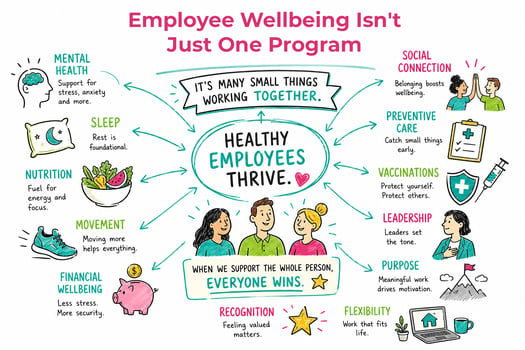
 TL;DR: Employee wellbeing isn't built through one program. It's created by many small, connected efforts — from mental health and movement to leadership, recognition, and preventive care — that support the whole person. When these pieces work together, employees and organizations both thrive.
Ask five people what "employee wellbeing" means, and you'll probably get five different answers.
One person thinks gym discounts. Another thinks mental health days. Someone in finance is thinking about retirement matching, and someone in HR is thinking about all of the above, plus about ten things nobody mentioned.
They're all right, actually. That's kind of the point.
Wellbeing isn't a single line item you can check off with one program or one perk. It's a web of overlapping factors, and when one piece is missing, the rest of the picture gets harder to see. A company that nails free snacks and step challenges but ignores financial stress or bad management is still going to have burned out, disengaged employees. The pieces have to work together.
Below, we break down what actually makes up employee wellbeing, and why treating it as one program instead of a whole ecosystem is where a lot of workplace wellness efforts fall short.
Why "One Program" Thinking Falls Short
It's tempting to pick a single initiative, roll it out, and call it done. A wellness challenge here, a lunch-and-learn there. These things aren't bad. They're just incomplete.
Employee wellbeing touches every part of a person's life: their body, their mind, their bank account, their relationships at work, and how supported they feel by the people managing them. A single program can address one or two of those. It can't address all of them.
That's why the most effective workplace wellness strategies treat wellbeing as connected, not siloed. Improve someone's sleep and their mood improves, too. Reduce financial stress and their focus at work improves. Give someone a sense of purpose and their motivation to take care of the rest of their health tends to follow. These things feed each other.
The Pieces That Make Up Employee Wellbeing
Here's a look at the categories that show up again and again when we talk about whole-person wellbeing at work.
Mental Health: Managers Who Actually Say Something
Most companies stop at offering an Employee Assistance Program. The problem is that many employees don't think about it until they're already overwhelmed.
What makes a difference is creating a workplace where managers notice when someone seems different and check in early. A simple, "You've seemed stretched pretty thin lately. How are you doing?" can open the door to a conversation before stress turns into burnout.
It also helps when leaders model healthy behavior. Taking a mental health day shouldn't require a long explanation. When leaders talk honestly about stress and use the same resources they encourage others to use, employees feel more comfortable doing the same.
Sleep: Respecting Time Off
You can't encourage healthy sleep while expecting employees to answer emails late at night.
Healthy workplaces protect personal time. That means leaders avoid sending after-hours messages unless something is truly urgent. Meetings are scheduled at reasonable times across time zones, and shift workers get as much schedule consistency as possible instead of last-minute changes that disrupt sleep.
Nutrition: Make Healthy Choices Easier
Most people already know they should eat more fruits and vegetables. Information usually isn't the problem. Convenience is.
Small changes throughout the workday can make healthier choices easier. Stock vending machines with better options, serve balanced meals during meetings, and offer on-site biometric screenings that help employees understand their own numbers. Seeing cholesterol, blood pressure, or glucose results often motivates people far more than another nutrition flyer.
Movement: Build It Into the Workday
Offering a discounted gym membership sounds good, but it doesn't help much if employees never have time to use it.
Instead, look for opportunities to encourage movement during the workday. Walking meetings, short stretch breaks, or lunchtime fitness classes make physical activity feel like part of the day instead of another task waiting after work.
Financial Wellbeing: Give People Practical Help
General advice about saving money rarely changes behavior.
Employees usually want answers to specific questions. How much is the company 401(k) match actually worth? Should they pay down debt first? Which health plan makes the most financial sense?
Lunch-and-learns with financial professionals, private coaching sessions, and clear explanations during open enrollment give employees information they can actually use.
Social Connection: Create Opportunities That Feel Natural
Few people enjoy mandatory team-building activities.
Connection usually happens through smaller, everyday interactions. Pair new employees with a buddy during their first few weeks. Encourage small group activities instead of large mixers. For remote teams, leave a few minutes at the beginning of meetings for casual conversation before jumping into the agenda.
Preventive Care: Make It Easy
Even employees with great health insurance often put off preventive care because they're busy.
Bringing services to the workplace removes many of those barriers. On-site biometric screenings, reminders about annual checkups, and follow-up support after screening results make it much easier for employees to take the next step instead of putting it off for another year.
Vaccinations: Remove the Friction
Getting vaccinated sounds simple until employees have to fit it into an already busy schedule.
Offering on-site vaccination clinics during the workday makes participation much easier. When employees don't have to schedule appointments, drive across town, or worry about cost, vaccination rates often increase significantly.
Leadership: Show Employees What Healthy Work Looks Like
Employees pay more attention to what leaders do than what they say.
If managers never take vacation or answer emails while they're supposed to be off, employees notice. Leaders who disconnect during time off, check in on workloads, and recognize when priorities need to shift create a healthier culture without saying much at all.
Purpose: Help People See the Bigger Picture
Most employees want to know that their work matters.
Managers can reinforce that by explaining why projects matter, not just what needs to be done. Sharing customer feedback, business results, or stories about the people who benefit from the work helps employees connect everyday tasks to a larger purpose.
Flexibility: Focus on Results
Flexible work policies only work when employees feel comfortable using them.
That means evaluating performance based on results instead of time spent online. It also means giving employees room to adjust their schedules when life happens, without making them feel like they're asking for a special favor.
Recognition: Be Specific
Recognition has the biggest impact when it's timely and genuine.
Instead of waiting for annual awards, encourage managers to acknowledge good work as it happens. A quick message that points out exactly what someone did well feels more meaningful than generic praise. Peer recognition programs can reinforce that culture by making appreciation part of everyday work.
How These Pieces Work Together
None of these live in isolation. Someone dealing with financial stress is probably sleeping worse. Someone who feels unrecognized at work is more likely to feel disconnected from their team. Someone with a supportive manager is more likely to actually use the mental health resources available to them.
That's why the strongest wellness strategies don't chase one trend at a time. They build a foundation across all these areas, even if it happens gradually. A biometric screening this quarter, a financial wellness workshop next quarter, better manager training in between. Progress doesn't have to happen all at once. It just has to be intentional and ongoing.
How Employers Can Build a More Complete Wellbeing Strategy
If you're reviewing your workplace wellness efforts, ask yourself a few questions:
- Are we supporting more than physical health?
- Do employees know what resources are available?
- Are managers helping create a healthy workplace culture?
- Do our programs reflect what employees actually want?
- Are we promoting wellbeing throughout the year instead of during one awareness month?
The answers can help identify opportunities to strengthen your overall strategy.
You don't need to launch everything at once. Small improvements made consistently often have a greater impact than one large initiative that quickly loses momentum.
Building a Wellbeing Strategy That Actually Works
If your organization is only checking one or two boxes right now, that's a normal starting point, not a failure. Most companies build these programs over time.
Start by asking where the biggest gaps are. Maybe your team has great fitness perks but no mental health support. Maybe preventive care is covered but nobody talks about financial stress. Identifying the gap tells you where to focus next.
From there, workplace wellness programs, biometric screenings, and flu shot clinics are all practical starting points that touch multiple pieces of the wellbeing picture at once. A screening event, for example, supports preventive care and can open the door to conversations about nutrition and movement, too.
Employee wellbeing was never going to be solved by a single perk. It's built one piece at a time, and the companies that understand that end up with healthier, more engaged teams because of it.