
TL;DR: Feeling appreciated at work isn't just nice, it's healthy. Employees who feel genuinely recognized burn out less, stress less, and stick around longer. But it only works when it's specific and consistent, not a once-a-year plaque or a generic email blast.
 Everyone wants to know their work matters. But when you keep showing up, doing your job, and hearing nothing, it starts to wear on you.
At first, it’s frustrating. Then you stop trying as hard. You second-guess yourself. You wonder if anyone would notice if you weren’t there.
That kind of stress doesn’t always stay at work. It follows you home. It affects your mood, your sleep, and eventually your health.
Real recognition can make a difference. Not canned praise or an employee-of-the-month email — just someone paying attention and saying, clearly, “I saw what you did. It mattered.”
In this post, we’ll explore how recognition can affect employee health, why so many workplace appreciation efforts miss the mark, and what meaningful recognition looks like when it’s done well.
What Happens When Employees Feel Appreciated?
Recognition isn't just a nice gesture. It's a biological one.
When someone feels seen and valued, the brain releases a small wave of feel-good chemicals, including dopamine and oxytocin. These same chemicals are tied to motivation, trust, and connection. In small doses, they help buffer the effects of everyday stress.
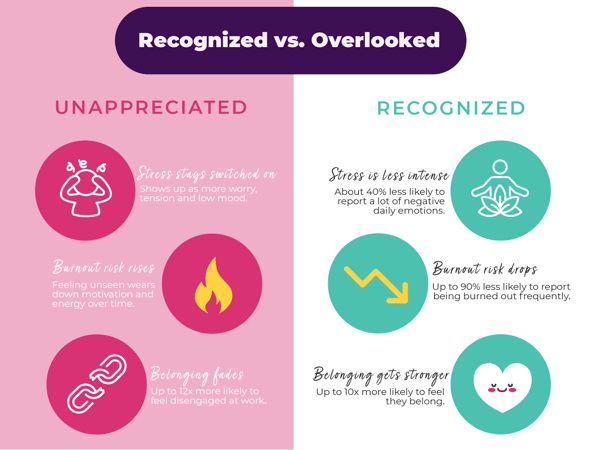
Now flip that scenario. When effort consistently goes unnoticed, the body doesn't just shrug it off. Chronic under-appreciation keeps the stress response switched on, which over time can contribute to fatigue, tension headaches, poor sleep, and a general sense of being run down.
In other words, a lack of recognition doesn't just feel bad. It can wear people down physically.
The Real Health Effects of Recognition
Here's why this matters more than most workplaces realize:
- It's protective against burnout. Employees who feel consistently recognized are far less likely to experience burnout than those who don't, according to research from Workhuman.
- It buffers stress. Employees who believe their work makes a real difference are significantly less likely to report high stress levels, according to workplace wellbeing research from Wellhub.
- It reduces turnover and boosts output. Organizations with strong recognition practices see meaningfully lower turnover and a real bump in productivity, according to SHRM.
- It protects against the physical toll of stress. Chronic occupational stress is linked to cardiovascular strain, headaches, and sleep problems, according to research published in MDPI's occupational health journal.
The bottom line? Recognition isn't a soft perk. It's a workplace health strategy hiding in plain sight.
Why So Many Workplaces Get Recognition Wrong
If recognition is this powerful, why do so many employees still feel overlooked?
Usually, it comes down to two things: frequency and sincerity.
A once-a-year award ceremony doesn't cut it. Neither does a generic "thanks for all you do" email blasted to the whole company. Employees can tell the difference between recognition that's specific and heartfelt versus recognition that's checking a box.
Meaningful appreciation has to feel personal, timely, and tied to something real. That's the piece a lot of companies miss.
What Meaningful Recognition Actually Looks Like
Here are some ways to make appreciation land the way it's supposed to.
1. Be Specific
"Great job on that project" is nice. "The way you handled that client's last-minute changes without missing the deadline was impressive" actually means something. Specific recognition shows you noticed the work, not just the outcome.
2. Make It Timely
Recognition loses power the longer it waits. A quick, genuine "thank you" right after a big effort lands much harder than a mention three months later at a review.
3. Let It Come From Peers, Not Just Managers
Appreciation shouldn't only flow top-down. Peer-to-peer recognition, whether it's a shout-out in a team meeting or a quick note, builds connection across the whole team, not just between employees and leadership.
4. Match the Recognition to the Person
Some people love public praise. Others would rather get a quiet, private thank-you. Pay attention to what actually makes someone feel valued instead of defaulting to a one-size-fits-all approach.
5. Recognize Effort, Not Just Big Wins
Not every contribution ends in a shiny result. Recognizing the effort behind the scenes, like someone who stayed late to help a coworker or handled a tough conversation with a client, tells employees that the process matters too.
6. Keep It Consistent
One big recognition event a year won't offset months of feeling unseen. Small, regular moments of appreciation build up over time and do far more for morale (and health) than an occasional grand gesture.
7. Make Leadership Participate
When managers and executives model genuine appreciation, it sets the tone for the whole culture. Employees are far more likely to recognize each other when they see leadership doing the same.
Tips for Building a Culture of Recognition
Rolling out meaningful recognition doesn't have to be complicated. A few things to keep in mind:
- Ask employees what feels meaningful to them. Recognition preferences vary, so a quick survey can go a long way.
- Build it into everyday routines. Add a recognition moment to weekly team meetings instead of saving it for special occasions.
- Train managers on how to give feedback well. Specific, sincere recognition is a skill, and most people can get better at it with a little guidance.
- Track it like any other wellness initiative. If recognition is meant to support employee health, treat it with the same intentionality as your other wellness programs.
- Follow through consistently. A recognition program that fades after a few months sends the opposite message of what it's meant to.
Don't Underestimate a Simple Thank You
At the end of the day, recognition is one of the simplest, lowest-cost tools a workplace has for protecting employee health. It doesn't require a big budget or a fancy program. It just requires paying attention.
When employees feel genuinely seen for their contributions, stress eases, motivation grows, and both mental and physical health benefit. That's a pretty strong return on something as simple as noticing someone's effort and saying so.
So the next time a coworker goes above and beyond, don't let it slide by unnoticed. That small moment of appreciation might be doing more for their health than you realize.