

TL;DR: Big life changes don’t usually start with big plans. They start with small habits built into everyday moments. This article shares simple, real-life habits that support energy, focus, confidence, and well-being without requiring more time or motivation. You don’t need to do all of them. Start with one. Let it stick. Small wins add up.
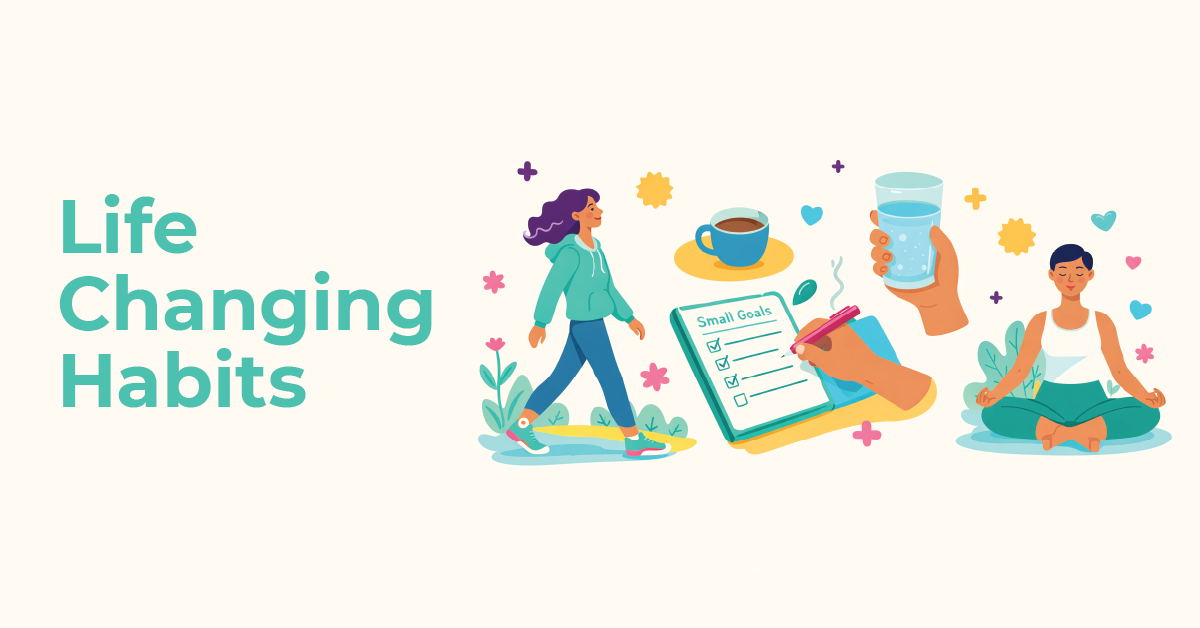
Big life changes rarely come from big, dramatic overhauls.
They usually come from small habits layered into everyday moments.
The kind you barely notice at first.
The kind that don’t require more time, more motivation, or a “perfect” schedule.
Below are simple, real-life habits people have added to their days that quietly improved energy, confidence, focus, and overall well-being. None of them are complicated. All of them are doable.
And that’s what makes them powerful.
Real Life-Changing Habits
Most of the habits that genuinely change your life are not dramatic. They don’t require a new identity, a 5 a.m. alarm, or endless motivation. They slip into your days quietly, almost unnoticed, until one day you realize your body feels steadier, your mind feels kinder, and your life feels a little more supported by you.
These 17 small habits support energy, focus, confidence, and emotional well-being. On their own, they may seem simple. Practiced consistently, they can change how your days feel and how you show up in your life.
You don’t need to do all 17. Start with one. Then build from there.
1. Turn Existing Moments Into Micro-Habits
One of the easiest ways to build a habit is to attach it to something you already do every day.
Take brushing your teeth.
Instead of just standing there, try balancing on one leg for the full two minutes. Morning on the right leg. Evening on the left. At first, ten seconds might feel impossible. Over time, balance improves. So does core strength and stability.
No extra time. No equipment. Just better use of a routine that already exists.
2. Don’t Wait for Energy. Create It.
A mindset shift that changes everything: “I don’t do things because I have energy. I have energy because I do things.”
When energy feels low, waiting rarely helps. But movement does. Cleaning one small area. Taking a short walk. Standing up and stretching.
Action often comes first. Energy follows.
This habit alone can break the cycle of feeling stuck on tired days.
3. Make Life Easier for “Future You”
Treat future you like a best friend. Do the small things today that tomorrow-you will appreciate. Wash the favorite jeans. Pour hot tea into an insulated tumbler before bed so it’s warm when you wake up. Prep lunch even when you don’t feel like it.
Future you notices.
Future you feels supported.
And that kindness adds up.
4. Set Boundaries With Your Phone
Mindless scrolling can quietly drain time and mental energy.
Setting daily time limits on social apps creates a natural pause. It doesn’t mean never scrolling. It simply means stopping before it becomes automatic.
That space often gets filled with rest, creativity, or connection instead.
5. Create Daily Non-Negotiables
Self-care doesn’t have to be elaborate to matter. Some people write a short list of daily non-negotiables. Simple moments that anchor the day.
Examples include:
- A tall glass of lemon water before anything else
- A skincare routine without multitasking
- A calm, uninterrupted review of the day’s tasks
- A walk or short movement break
These small rituals protect energy before life admin takes over.
6. Start and End the Day With Positivity
What you tell yourself consistently matters.
Some people start the day by looking in the mirror and saying, “I’m the luckiest person in the world and good things always happen to me.” At night, they add to a running list of good moments from the day.
Even small wins count.
A good parking spot.
A kind interaction.
A quiet moment.
Over time, the brain learns to notice more of the good.
7. Accept Compliments Without Deflecting
When someone gives a compliment, try saying just two words.
“Thank you.”
No minimizing. No explaining. No pointing out flaws. Owning achievements builds confidence and self-respect. Life is too short to swat away the good.
8. Keep a “Wins” Journal at Work
Not every success gets celebrated out loud.
Keeping a simple list of work wins helps capture progress that might otherwise be forgotten. Finished projects. Positive feedback. Problems solved.
On hard days, this list becomes proof that effort matters.
9. Schedule Things That Make You Happy
Joy shouldn’t be left to chance. Scheduling easy, happy moments creates something to look forward to even during stressful weeks. Hot chocolate Mondays. Reading outside on Saturday mornings. A favorite podcast on walks.
Small pleasures make tough seasons easier to carry.
10. Stay Connected in Creative Ways
Connection does not have to be complicated to be meaningful.
Small, creative gestures can go a long way. Writing a short note to a colleague, sending a handwritten thank-you, or dropping a quick message of appreciation adds intention to everyday interactions.
In a fast-paced, digital environment, these moments stand out. They build trust and strengthen relationships.
11. Be Intentional With Your Words
Language shapes experience. Simple shifts can change how situations feel:
-
“I’m spending” becomes “I’m investing”
-
“I can’t” becomes “I’m learning” or “I’m willing”
Words carry weight. Over time, these changes reshape mindset and self-belief.
12. Practice Gratitude in Your Own Way
Gratitude doesn’t have to live in a journal. Some people share it out loud with their dog or cat. Others keep a note titled “Good Things Are Always Happening to Me” and add entries as they go.
The goal isn’t perfection. It’s awareness.
13. Honor Your Natural Rhythm
Not everyone thrives on early mornings.
Leaning into your body’s natural rhythm, whether you’re a night person or an early riser, can make everything else feel easier. Productivity improves when you work with your body instead of fighting it.
14. Speak Your Identity Into the Present
Try speaking about yourself in the present tense.
“I am a runner.”
“I am a writer.”
“I am a community leader.”
The brain and body often follow the story you tell.
15. End the Day With a Small Act of Care
Even on nights when everything feels like too much, one tiny ritual can help.
Oiling cuticles. Lotioning hands. Journaling. A few deep breaths before bed.
It signals care, calm, and closure to the day.
16. Create a “Minimum Effort” Option for Hard Days
Some days, even the simplest habit feels hard to start.
That’s where a minimum effort option can help.
Instead of skipping the habit entirely, define the smallest possible version of it. Something so easy it removes all pressure. For example, if the goal is walking 7,000 steps on the treadmill, the minimum effort option might be stepping onto the treadmill for a moment. That’s it. Goal technically started.
Once you’ve taken that first step, momentum often kicks in. Stepping on turns into a few minutes of walking. A few minutes can turn into more. Not always, but often enough to matter.
17. Say the Compliment Out Loud
When a kind thought pops into your head about someone else, don’t sit on it.
Say it.
Complimenting people in the moment, without overthinking or hesitating, creates instant connection. It lifts the other person, and it usually lifts you too. Over time, this habit builds stronger relationships, warmer interactions, and a more positive environment without requiring any extra effort.
If you thought it, it’s probably worth saying.
Why These Habits Work
When people think about changing their habits, they often picture big, disruptive changes. New routines. New schedules. New levels of motivation. In reality, the habits that create the biggest impact tend to be small, simple, and easy to repeat.
Life-changing habits don’t usually look dramatic.
They look like balance during toothbrushing.
Kindness to future you.
Words chosen with intention.
Noticing the good, again and again.
Small habits practiced daily can quietly transform how a day feels. And over time, how life feels, too.