
TL;DR: Five-minute wellness activities make it easy to add small, meaningful moments of well-being to the workday. By building quick breaks into meetings, employers can help employees pause, reset, move, connect, and refocus without adding another big task to the calendar.
 Meetings have a reputation.
They run long. They multiply mysteriously. They somehow turn “quick sync” into 47 minutes of regret.
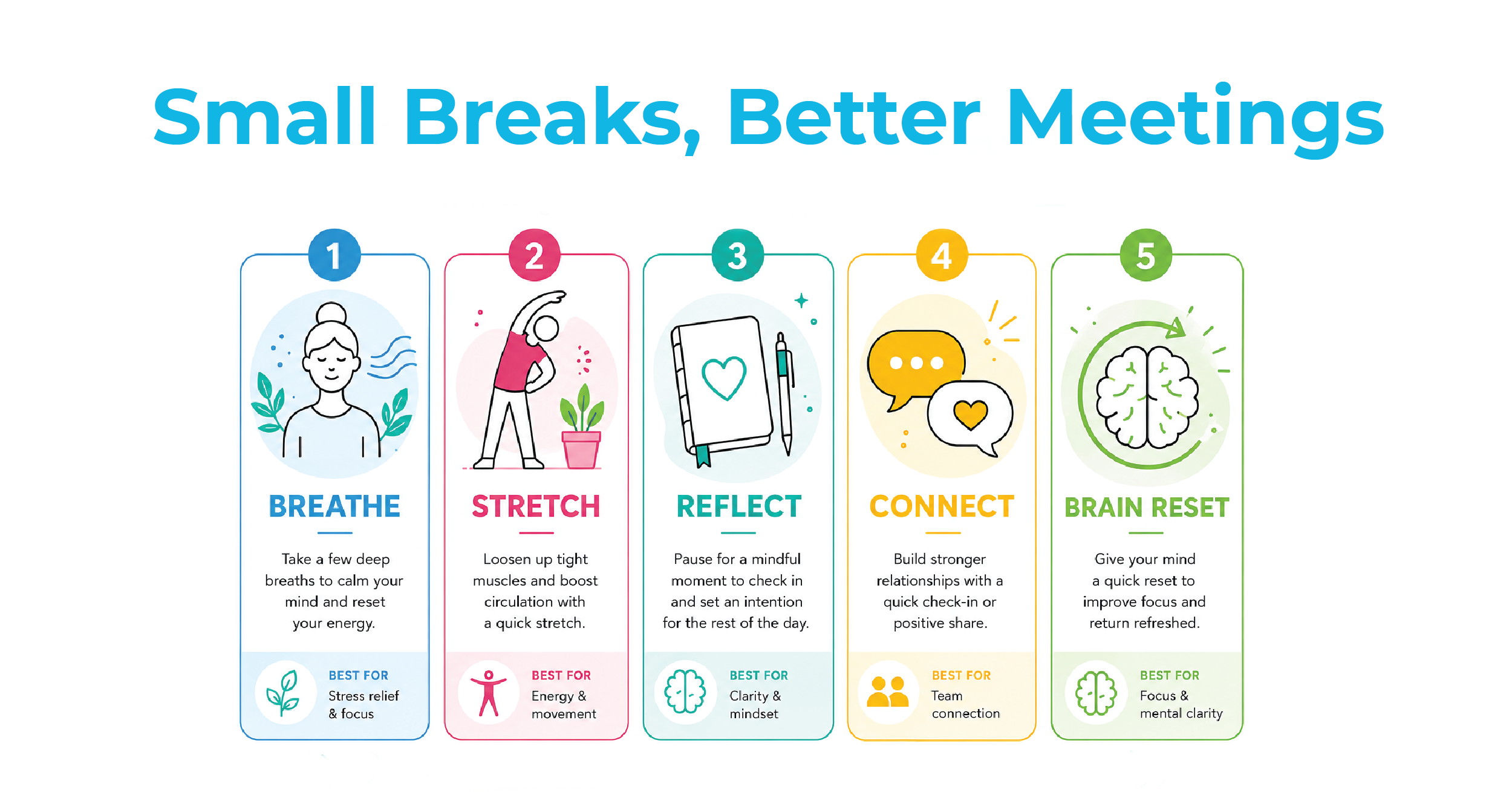
But meetings don’t have to drain the life out of the workday. In fact, with the right reset, they can become a simple opportunity to help employees pause, breathe, stretch, laugh, refocus, and reconnect.
That’s where five-minute wellness activities come in.
These quick activities don’t require a big budget, fancy equipment, or a full wellness committee strategy session. They’re short enough to fit at the beginning, middle, or end of a meeting, but meaningful enough to shift the energy in the room.
Whether your team needs a mental reset, a movement break, a little stress relief, or just a moment to feel human again, these five-minute ideas make workplace wellness feel easy, approachable, and doable.
What Are Five-Minute Wellness Activities for Meetings?
Five-minute wellness activities for meetings are short, low-effort practices that happen at the start, middle, or end of a meeting to support employee well-being. Think of them as a warm-up for the brain or a quick reset for the body.
These activities can be physical, mental, or social. They don't require equipment, and they don't ask employees to do anything uncomfortable or unfamiliar. They're designed to be quick, accessible, and easy to repeat.
The best part? Five minutes is all it takes to make a real difference in how your team feels during and after a meeting. Wellness moments built into meetings give people a chance to breathe, reset, and reconnect before diving into the next agenda item.
Here's why it's worth doing:
- Stress reduction: Even a short breathing exercise can lower cortisol levels and reduce feelings of overwhelm.
- Improved focus: A quick movement break or mindfulness moment helps the brain shift gears and pay better attention.
- Stronger team culture: Shared wellness moments build connection, especially for remote and hybrid teams.
- Better meeting outcomes: Employees who feel good engage more, contribute more, and retain more from meetings.
Stress has become a regular part of daily life for many Americans. According to the American Psychological Association’s Stress in America survey, most adults say their stress has increased over the past five years, and about 75% report physical or emotional symptoms related to stress.
For employers, this creates an opportunity to offer small, consistent wellness touchpoints throughout the day. Even simple moments to pause can help employees manage stress in a more practical, approachable way.
Five-Minute Wellness Activities for Meetings: 20 Ideas to Try
Ready to get started? Here's a full list of five-minute wellness activities that work for in-person, remote, and hybrid meetings alike.
1. Box Breathing
Open the meeting with a simple breathing exercise. Box breathing (inhale for 4 counts, hold for 4, exhale for 4, hold for 4) is used by everyone from elite athletes to emergency responders to calm the nervous system fast. It takes under two minutes and sets a focused, calm tone for the rest of the meeting.
2. Gratitude Go-Around
Ask every person to share one thing they're grateful for before the meeting kicks off. It doesn't need to be work-related. This quick social activity boosts mood, increases connection, and gets people out of their heads before diving into the agenda.
3. Desk Stretches
Long meetings and back-to-back screen time take a toll on the body. A guided two-minute stretch at the start of a meeting can loosen up tight shoulders, necks, and hips. You don't need a yoga instructor. A simple routine of shoulder rolls, neck tilts, and seated twists does the trick.
4. One-Word Check-In
Ask each person to describe how they're feeling in a single word before the meeting starts. No elaboration required. This builds emotional awareness, helps leaders understand the room, and signals to employees that how they feel matters to the organization.
5. Mindful Minute
Set a timer for 60 seconds and ask everyone to sit quietly with their eyes closed. No phones, no typing, just one minute of stillness. This practice sounds deceptively simple, but research shows even brief mindfulness moments reduce stress and improve cognitive performance.
6. Positivity Shout-Out
Give team members 60 seconds to shout out a coworker who helped them recently. This recognition activity boosts morale, reinforces team culture, and makes people feel seen. It's especially powerful for remote teams who may not have natural opportunities to celebrate each other.
7. Walking Start
For virtual meetings, encourage participants to start the call while walking in place or around their home. For in-person teams, begin the meeting with a two-minute walk around the office before sitting down. Physical movement jumpstarts energy and improves mood before the first agenda item is discussed.
8. Progressive Muscle Relaxation
Guide the group through a quick tension-and-release exercise. Start with hands (clench for five seconds, release), then move to shoulders, then the face. This physical reset takes less than three minutes and is particularly helpful after a high-stress period or before a challenging conversation.
9. Share a Win
Ask each team member to share one professional or personal win from the past week before diving in. Wins can be big or small. Starting a meeting with positive momentum shifts the emotional tone and sets the stage for productive collaboration.
10. Eye Relaxation Exercise
For teams spending most of their day on screens, eye strain is a real problem. Guide the group through the 20-20-20 rule: look at something 20 feet away for 20 seconds. Then do a few slow eye rolls and closed-eye rests. Simple, fast, and great for long video call days.
11. Affirmation Round
Share a workplace affirmation to open the meeting and invite team members to add their own. Affirmations like "We're capable of solving hard problems" or "Our work matters" may feel small, but they shift mindset and set a confident tone for what's ahead.
12. Humor Break
Laughter is good medicine. Share a clean, work-appropriate joke or a funny meme relevant to your industry. Invite team members to share one of their own. Humor reduces tension, builds connection, and makes even the most packed meeting agendas feel more manageable.
13. Hydration Check
Before the meeting starts, give everyone a quick reminder to grab some water or take a sip. It’s a small habit, but it can help support focus, energy, and alertness throughout the day. Best of all, it’s easy to add to any meeting.
14. Breathing for Energy
When a meeting falls in the mid-afternoon slump, try a quick energizing breath technique. The "stimulating breath" (rapid, equal inhales and exhales through the nose for 15 to 30 seconds) is known to increase alertness and energy. It's like a natural cup of coffee for the group.
15. Mindful Listening Exercise
Practice active listening as a quick wellness and team-building activity. Pair employees up and give each person 90 seconds to speak about anything, while the other listens without responding. Then switch. Mindful listening reduces stress, improves communication, and reminds people to be present.
16. Visualization Break
Guide the group through a 90-second visualization at the start or end of the meeting. Ask them to close their eyes and picture a goal they're working toward or a peaceful place they enjoy. Visualization is a proven stress reducer and motivation booster that can be done from any chair.
17. Posture Reset
Poor posture is an underrated contributor to fatigue and discomfort during long meetings. Spend two minutes walking the team through a posture reset: feet flat on the floor, shoulders back and down, chin tucked. For remote employees, encourage a quick standing stretch if they've been seated for a while.
18. Nature Photo Share
Ask team members to share a photo from their phone of something in nature that brings them joy. It could be a sunset, a pet, a hiking trail, or their backyard garden. Connecting with nature, even virtually, is linked to reduced stress and improved mood.
19. Three Deep Breaths Together
It doesn't get simpler than this. Before launching into the meeting, ask everyone to take three slow, deep breaths together. This group sync moment creates connection, lowers cortisol, and signals that the team is present and ready. Try it even once and you'll notice the difference in the room.
20. End with a Body Scan
Close the meeting with a two-minute body scan. Ask participants to close their eyes and notice how their body feels from head to toe without judgment. This grounding exercise helps employees transition out of work mode and is a particularly good practice for end-of-day meetings.
Tips for Making Meeting Wellness Activities Stick
Starting something new takes intention. Here are a few practical tips to help wellness moments become a natural part of your meeting culture.
Keep it consistent. Choose one or two activities and rotate them over a few weeks before introducing something new. Consistency helps employees know what to expect and builds a culture of wellness over time.
Get leadership involved. When managers and executives participate in wellness moments, employees follow. Leadership buy-in sends a clear message that well-being is valued at every level of the organization.
Make it optional, but welcoming. Some employees may feel awkward at first. That's normal. Keep the tone light and never put anyone on the spot. Over time, most people come around when they see how the activities feel in practice.
Ask for feedback. After a month of incorporating wellness moments, ask your team which activities resonated most. Their responses will help you build a rotation that actually gets people excited.
Pair it with your existing wellness program. Meeting wellness moments work best when they're part of a larger workplace wellness strategy. If your organization offers biometric screenings, health assessments, or wellness challenges, wellness meeting activities are a natural complement.
Your Meeting Wellness Questions, Answered
Not sure how to make wellness activities work during meetings? You’re not alone. From timing to participation to avoiding the dreaded awkward pause, here are a few quick answers to help make meeting wellness feel easy, natural, and worthwhile.
Q: How do I introduce wellness activities to a skeptical team?
A: Start small. A simple gratitude round or a 60-second breathing exercise is easy to ease into without feeling forced. Frame it as a quick experiment and invite feedback. Once people experience the shift in energy, buy-in usually follows naturally.
Q: Are these activities appropriate for remote and hybrid teams?
A: Absolutely. Most of the activities on this list work just as well on video calls as they do in a conference room. Breathing exercises, check-ins, gratitude rounds, and visualization are all screen-friendly. For physical activities, remote employees can simply stand, stretch, or walk in place on their own.
Q: How often should we do meeting wellness activities?
A: Start with once per day, at the beginning of your first meeting. As your team gets comfortable, you can add a brief activity to additional meetings throughout the week. Even two or three wellness moments per week can have a meaningful impact over time.
Q: What if we're tight on meeting time?
A: That's the beauty of five-minute activities: they're designed to fit into the tightest schedules. You can even build wellness into the first two minutes of the meeting while people are still joining. No extra time block required.
Ready to Bring More Wellness Into the Workday?
Five minutes doesn't sound like much, but over weeks and months, those small moments add up to a culture of care. Employees who feel supported at work are more engaged, more productive, and more loyal to their organizations.
Meeting wellness activities are one of the simplest, most cost-effective tools in any HR professional's toolkit. You don't need a big budget or a formal program to start. You just need five minutes and a willingness to try.