
TL;DR: Only 1 in 4 employees strongly believe their organization cares about their well-being. When people feel cared for, they’re more engaged, more loyal, and less stressed. As organizations face rising costs, shifting expectations, and growing burnout, the future of work depends on how well leaders build cultures of care.
You can feel it the moment you walk into a workplace that genuinely cares about its people.
Not the “look, we bought a meditation app” kind of caring — the real kind.
The kind that shows up in how teams treat each other, how leaders communicate, and how work actually gets done.
For years, organizations have understood the basics: supporting well-being leads to healthier people, stronger teams, and better business outcomes. That part hasn’t changed. What has changed is the way we think about well-being itself.
Employee wellness is no longer a side project. It’s becoming core business infrastructure. The systems, habits, and cultural norms that fuel performance.
But this shift isn’t happening in a vacuum.
Economic pressure, changing employee expectations, and rising healthcare costs are pushing organizations to rethink what meaningful support actually looks like. The result is a moment of real choice.
Heading into 2026, the question becomes:
Will well-being evolve into a true engine for growth and culture. Or continue to sit on the sidelines as an unrealized promise?
What is Organizational Care
Organizational care is simply the degree to which employees believe their company genuinely supports their well-being. It’s the difference between a workplace where people clock in… and a workplace where people come alive. When employees feel valued and supported, they bring more energy, creativity, and commitment to their work. In short, care fuels performance.
According to new research from WebMD Health Services’ Center for Research, only 25% of employees strongly agreet hat their organization cares about their well-being. Which is the lowest level since 2022.
That means three out of four people don’t feel cared for at work, and that disconnect affects everything from morale to performance.
And here’s the powerful part: when employees do feel cared for, the impact is immediate. They’re 56% more engaged, 34% more likely to stay, 34% less likely to experience work-related stress, and 37% less likely to feel burned out. Care isn’t a “nice-to-have.” It’s a performance multiplier.
Organizations that consistently demonstrate care see real results:
-
Higher retention and engagement
-
Stronger performance and teamwork
-
A standout employer brand that attracts great talent
Despite its importance, the care gap is growing. The WebMD report shows that senior leaders are twice as likely as individual contributors to say their company cares about employees. That means many leaders believe they’re showing care — but employees aren’t feeling it.
And that disconnect has real consequences.
We spend up to one-third of our lives working. When people don’t feel cared for, it takes a toll not just on job satisfaction but also on physical and emotional health.
The takeaway for organizations? It’s time to listen more closely, act more boldly, and close the gap between intention and impact.
How Care Connects to Wellness
Care and well-being are inseparable. You can’t improve one without the other.
When employees feel cared for, they’re more likely to:
-
Engage in wellness programs. Participation rises when people feel support is genuine, not performative.
-
Adopt healthier habits. Psychological safety and trust make it easier for employees to make changes that stick.
-
Seek preventive care. Employees who believe their organization values them are more likely to use screenings, flu shots, and mental health resources.
-
Model well-being for others. Care has a ripple effect. When leaders show up with empathy, it normalizes balance for everyone else.
At its best, workplace care becomes a wellness multiplier, amplifying every investment you make in employee health.
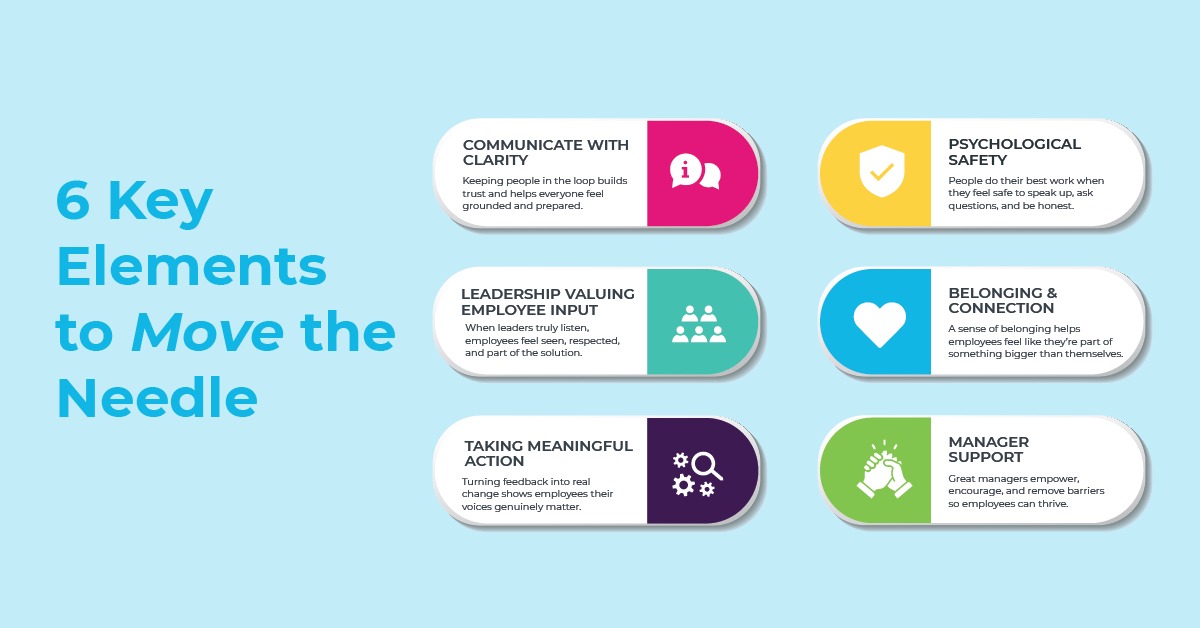
6 Ways to Show You Care
To turn care into a wellness advantage, think beyond programs. Build practices that shape how people feel — safe, included, informed, and valued. Here’s how to move from good intentions to measurable impact:
1. Communicate with Clarity
Uncertainty breeds stress. Regularly share updates, decisions, and direction so employees don’t have to fill in the gaps.
Leaders who hold town halls and listening sessions — especially during big business or people changes — send a clear message: “You matter enough to be included.”
Wellness connection: Transparent communication reduces anxiety and builds a sense of control, a key factor in emotional well-being.
2. Listen with Intention
Care isn’t a one-way message. It’s a conversation. Invite employees to share what’s working and what’s not. Listening tours, manager check-ins, or digital suggestion boards create safe spaces for input.
Wellness connection: Being heard validates employees’ experiences and supports mental health, trust, and belonging.
3. Act on What You Hear
Feedback without follow-through breeds frustration. When leaders take meaningful action and communicate progress — whether it’s updating a policy, improving benefits, or adjusting workloads — employees see proof that their voices matter.
Wellness connection: Action reinforces psychological safety, empowering employees to participate openly in both wellness and business initiatives.
4. Create Safety to Speak Up
Care means giving people permission to be human. That includes asking questions, admitting mistakes, and expressing concerns without fear of judgment.
Wellness connection: Psychological safety is strongly linked to lower burnout and higher creativity. When people feel safe, they perform and recover better.
5. Build Real Belonging
Belonging is the emotional side of care. It’s the feeling of being valued and included, not just employed.
Create opportunities for connection and fun. Things like team volunteer days and wellness challenges to shared celebrations and cultural spotlights. Compassion and flexibility go hand in hand here: flexible schedules and inclusive benefits show that life outside of work matters, too.
Wellness connection: Belonging reduces stress and loneliness while boosting mood, engagement, and even physical health.
6. Support Managers as Wellness Multipliers
Managers shape the daily employee experience more than any program ever could. Equip them with training, time, and tools to lead with empathy. Encourage managers to check in. And not just on performance, but on how their people are doing.
Wellness connection: When managers model care, it normalizes balance and participation in health initiatives. It’s the clearest signal employees get that well-being is truly part of the culture.
The ROI of Care
When care becomes cultural, the return on investment goes far beyond what can be measured on a spreadsheet.
Yes, you can see the metrics like higher engagement scores and reduced turnover. But the real ROI of care lives in the moments between the numbers:
-
The manager who checks in because they notice someone’s energy shift.
-
The employee who feels safe enough to ask for help instead of burning out.
-
The team that laughs together after a hard week.
Care is the human ROI — the energy, trust, and creativity that can’t be tracked in a dashboard but absolutely determine how your organization performs. When employees feel cared for, they take ownership of their health, their work, and their relationships.
Caring is the Strategy
Employees who feel cared for rate their experience in these six areas up to 91% higher than those who don’t. That’s not just a number, it’s a reflection of how deeply care shapes the day-to-day work experience.
When well-being is embedded in the culture, people feel it. Trust grows. Teams perform better. And the organization becomes a place where people truly want to be.
In 2026, the companies that care most will also perform best.
Because when people thrive, business does too.
How does your orgainzation show care to your employees? Share below.