

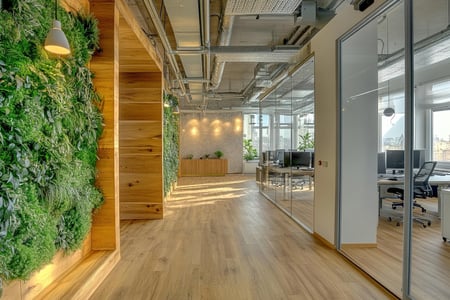
TL;DR: Workspace design can affect how stressed, focused and comfortable employees feel. Small changes like better lighting, less noise, natural elements and more control over the environment can help support employee well-being.
Think about the space where you work.
Is there constant chatter in the background? Harsh overhead lighting? A desk squeezed into a busy walkway? Maybe your home office doubles as a laundry room, storage space and place where everyone seems to need you at exactly the wrong moment.
These details might seem small, but your surroundings can affect how you feel throughout the workday.
Our brains are constantly taking in information about what's happening around us. Noise, lighting, temperature, visual distractions and even whether we feel like we have enough personal space can influence our stress response.
That's where workspace design and nervous-system regulation come together.
A thoughtfully designed workspace won't eliminate workplace stress. Deadlines will still exist. Your inbox will still fill up. But creating an environment that reduces unnecessary stressors can make it easier for employees to focus, recharge and feel comfortable throughout the day.
Here's what employers should know about designing workplaces with employee well-being in mind.
What Does Nervous-System Regulation Mean?
Your nervous system is essentially your body's communication network. It helps control everything from movement and breathing to how you respond to what's happening around you.
Part of that system is the autonomic nervous system, which manages many of the functions you don't consciously think about, including heart rate, digestion and your body's stress response. When your brain senses a potential threat or challenge, the sympathetic nervous system helps prepare your body to respond. You probably know this as the "fight or flight" response.
During this response, your heart rate may increase, your muscles can tense and you become more alert. That's incredibly useful when you actually need to respond to danger, but modern work environments can also contain plenty of smaller stressors that keep our brains busy throughout the day.
A phone ringing nearby.
Someone talking behind you while you're trying to concentrate.
A bright light glaring off your monitor.
Back-to-back meetings with nowhere quiet to reset.
None of these things is particularly alarming on its own. But when distractions and demands pile up throughout the day, employees may find themselves feeling tense, distracted or mentally drained.
Nervous-system regulation refers to the body's ability to move between states of activation and recovery appropriately. And while workspace design is only one piece of that puzzle, the environment can either add to an employee's mental load or make the workday feel a little easier to navigate.
Can Your Workspace Really Affect Stress?
Research suggests that the physical workplace can influence how employees feel and function throughout the day.
One study of 114 office workers examined factors including lighting, temperature and noise. Researchers found that inadequate indoor environmental conditions were associated with reduced work performance, increased tiredness and distraction, and lower employee well-being.
More recent research has also looked specifically at the relationship between office environments and physiological stress. A 2025 systematic review examined studies using measures such as heart rate variability, cortisol and electrodermal activity to better understand how office design may affect the body's stress response. The researchers found evidence that elements of the physical office environment may influence physiological stress, although they also noted that this is still a developing area of research.
For employers, the takeaway is fairly practical. Employees spend hours interacting with their surroundings every day, and uncomfortable or distracting conditions can create additional demands on their attention.
The answer isn't to turn the workplace into a silent spa. People still need spaces where they can collaborate, talk, laugh and get work done. A better goal is to give employees options while reducing environmental stressors that don't need to be there.
7 Ways Workspace Design Can Support Employee Well-Being
Supporting employee well-being through workspace design doesn't necessarily require an expensive office renovation. In many workplaces, relatively small changes can make the environment more comfortable and give employees greater control over how and where they work.
Here are a few places to start.
1. Give Employees Access to Natural Light
There's a reason sitting near a window often feels better than spending eight hours under artificial lighting. Light plays an important role in the body's circadian rhythm, which helps regulate our natural sleep-wake cycle.
One study of office workers compared employees working in environments with windows to those with little or no daylight exposure. Workers with windows received significantly more light during the workweek and reported better overall sleep quality.
Whenever possible, arrange workspaces so employees have access to windows and daylight. If natural light is limited, look at the lighting you can control. Extremely bright overhead lights or poorly positioned lights that create screen glare can make a workspace uncomfortable, while adjustable task lighting gives employees a little more control over their immediate environment.
2. Pay Attention to Noise
Noise is one of those workplace issues that affects everyone differently. Some employees can tune out a nearby conversation without thinking twice, while others lose their train of thought the second a coworker starts talking behind them.
This can make open offices particularly challenging. Conversations, phones, keyboards, video meetings and people moving through the space create a steady stream of sensory information, especially for employees trying to complete work that requires concentration.
Rather than trying to make the entire workplace quiet, think about creating different environments for different needs. Quiet rooms or focus areas give employees somewhere to go when they need fewer distractions, while acoustic panels, carpeting and other sound-absorbing materials can help reduce background noise in shared spaces.
Workplace norms can help, too. Something as simple as encouraging longer conversations and video calls to happen away from designated focus areas can make the office more comfortable for everyone.
3. Bring Some Nature Inside
Plants may deserve a little more credit around the office.
A growing area of research called biophilic design looks at how incorporating nature and natural elements into buildings can influence the people using those spaces.
A 2023 study examined how natural elements in office environments affect workers' stress responses. Researchers found evidence supporting strategies such as access to outdoor environments and creating outdoor areas where employees can step away and recharge.
That could mean adding indoor plants, providing views of green space or creating an outdoor area where employees can take breaks.
If you have an outdoor courtyard, patio or walking path that employees rarely use, consider encouraging people to actually step outside during the workday.
Sometimes the best wellness space is already there.
4. Create Spaces for Different Energy Levels
Most offices are technically designed around one activity: working. But employees aren't doing the same kind of work for eight hours straight.
Someone might brainstorm with coworkers in the morning, spend an hour concentrating on a detailed report, join a video meeting after lunch and need a few quiet minutes before jumping into the next project. The environment that's great for one of those activities might be frustrating for another.
Creating a mix of spaces gives employees more flexibility. Collaborative areas can accommodate conversations and group work, while quieter spaces provide somewhere to concentrate. Comfortable break areas give employees a place to step away without having to leave the building entirely.
When employees have some choice over where they work, they can better match their surroundings to what they're trying to accomplish.
5. Reduce Visual Clutter
Visual clutter is easy to overlook because it tends to accumulate gradually. Boxes get stacked in corners, bulletin boards fill up, cords collect around desks and outdated signs stay on the wall long after anyone remembers why they were posted.
All of those things become part of the environment employees see and process every day.
This doesn't mean the workplace needs to look completely bare. Offices should still have warmth and personality. The goal is simply to make shared spaces feel organized and easy to navigate.
Start with the places employees use most often. Clear unnecessary items from counters, organize supplies, deal with tangled cords and remove signs or notices that are no longer relevant. Small changes can make busy areas feel much less distracting without turning the office into a minimalist showroom.
6. Give Employees Some Control Over Their Comfort
Finding one office temperature, chair position or lighting level that makes everyone happy is probably impossible. People have different bodies, preferences and sensitivities, so flexibility can go a long way.
Whenever possible, give employees some control over their immediate workspace. Adjustable chairs, monitor stands, sit-stand desks and task lights allow people to make small changes based on what feels comfortable to them. In larger workplaces, providing access to warmer, cooler, quieter or brighter areas can offer another level of flexibility.
Having some control over the environment can be helpful in itself. Instead of spending the day tolerating a workspace that doesn't feel right, employees have options for making it work better for them.
7. Don't Forget About Break Spaces
The break room shouldn't feel like an afterthought.
Employees need places where they can temporarily step away from work demands, but a restorative space doesn't need meditation cushions, aromatherapy or a trickling indoor fountain. It can simply be a comfortable place that feels separate from someone's desk.
Consider the basics first. Comfortable seating, softer lighting, access to water and some separation from busy work areas can make a break space more inviting. If an outdoor option is available, make sure employees know they're welcome to use it.
The culture around breaks matters just as much as the space itself. A beautifully designed break room won't do much for employee well-being if everyone feels guilty for leaving their desk.
What About Employees Working From Home?
Workspace design matters for remote employees, too. In some ways, it can be even harder for remote workers to separate work from everything happening around them.
Not everyone has a dedicated home office. Employees may be working from kitchen tables, bedrooms or shared spaces. Encourage remote employees to focus on the parts of their environment they can control.
Moving a desk closer to a window, using headphones during focus time, adding a lamp instead of relying entirely on overhead lighting or clearing unnecessary items from the immediate work area can help.
Creating a visual end to the workday can also help establish some separation between work and personal time. That might mean closing the laptop, putting work materials away, turning off the desk lamp or physically leaving the workspace when possible.
These routines won't completely erase the boundaries between work and home, but they can create a clearer transition at the end of the day.
Workspace Design Is One Part of Workplace Well-Being
There is one limitation employers should keep in mind when thinking about workplace design: you can't design your way out of an unhealthy workplace culture.
Plants aren't going to fix unreasonable workloads, and a quiet room won't solve a calendar packed with nonstop meetings. Workspace improvements are most useful when they're part of a broader approach to employee well-being.
Look at the physical environment alongside workload, flexibility, manager support, psychological safety, employee benefits and opportunities to take meaningful breaks. These factors work together to shape how employees experience their jobs.
It's also worth asking employees what would make their work environment better. A short survey might reveal that noise is a major distraction, employees want more private areas for focused work or the break room nobody uses is simply uncomfortable.
You may find that the changes employees value most aren't the expensive ones.
Create a Workplace That Feels Better to Work In
Employees spend a lot of time at work. Their environment shouldn't make the day harder than it needs to be.
Take a walk through your workplace and pay attention to what employees experience. Listen to the noise. Notice the lighting. Look at where people go when they need to concentrate or take a break. See whether employees have choices about how and where they work.
You don't need a perfectly designed office.
A few thoughtful changes can reduce unnecessary distractions and create more opportunities for employees to focus, reset and feel comfortable during the workday.
Sometimes supporting employee well-being starts with simply paying attention to the space around us.