
TL;DR: The questions nurses hear most often are usually the ones many people are wondering about. Asking them is part of taking charge of your health, and getting answers can help you feel more confident about protecting yourself and those around you this flu season.
 Every fall, nurses roll into break rooms and conference rooms across the country and set up shop for a day (or two) of workplace flu shot clinics.
And every year, the questions roll in right along with the employees.
Some questions are practical. Some are nervous. A few are just plain funny. But all of them come from the same place: people want to feel informed and comfortable before they roll up their sleeve.
This post rounds up the questions nurses hear most at workplace flu clinics, plus the answers they give so employees walk away feeling confident, not confused.
Why Employees Ask So Many Questions at Flu Shot Clinics
Getting a flu shot only takes a few seconds. Deciding to get one, though, often comes with a lot of back-and-forth in someone's head first.
Maybe it's been years since their last shot. Maybe they had a bad experience once and are still wary. Maybe they just want to know what's actually in the vaccine before it goes into their arm.
Whatever the reason, workplace flu shot clinics work best when nurses take the time to answer questions patiently and clearly. It builds trust, it eases nerves, and it helps more employees say yes to the vaccine.
The Questions Everyone Asks Before a Flu Shot
If you've ever attended a workplace flu clinic, you've probably noticed the line moves pretty quickly. But before each vaccination, nurses often hear many of the same questions.
And that's a good thing.
Asking questions helps you make informed decisions about your health. Here are 10 of the most common questions nurses hear during flu clinic season, along with answers backed by current medical guidance.
1. Does the Flu Shot Give You the Flu?
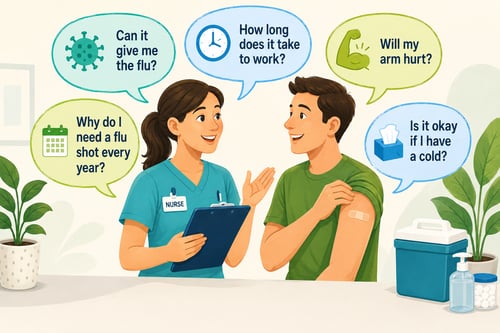
This is easily one of the most common questions nurses hear, and the answer is no. The flu shot contains an inactivated virus or no virus at all (in the case of recombinant vaccines), so it can't give you the flu. Any mild symptoms afterward, like a low-grade fever or achiness, are just your immune system doing its job and building protection.
2. Will My Arm Be Sore Afterward?
Some soreness at the injection site is normal and usually goes away within a day or two. Nurses often recommend moving the arm normally (not babying it) and using a cold compress if it's bothering you. Soreness is actually a sign your immune system is responding to the vaccine.
3. How Effective Is the Flu Shot This Year?
Effectiveness varies from season to season depending on how well the vaccine matches the circulating strains. According to the CDC's report on the most recent flu season, the vaccine reduced the risk of hospitalization by roughly 30% for adults, with even stronger protection for children. Looking at the bigger picture, a study spanning eight flu seasons found the vaccine was about 80% effective at preventing flu-related death in children overall, with protection at 87% for children without underlying health conditions and 77% for those with them. Even in years when the match isn't perfect, the shot still tends to make illness milder if you do catch the flu.
4. Can I Get the Flu Shot If I'm Pregnant?
Yes, and it's actually strongly recommended. Pregnant women are at higher risk for flu complications, and the vaccine also helps protect newborns in their first few months of life, before they're old enough to be vaccinated themselves. Nurses will always suggest checking with an OB if there are any personal concerns.
5. My Arm Always Hurts a Day Later. What Should I Do?
Some soreness the day after is completely normal, and the best thing to do is keep the arm moving. Regular use like reaching, lifting, and normal daily activity actually helps work through the stiffness faster than keeping it still. Nurses often compare it to any other minor muscle soreness: movement helps more than rest does.
6. What If I'm Allergic to Eggs?
This used to be a bigger concern than it is now. Most people with egg allergies can safely receive a flu shot, and egg-free formulations are also available for those with more severe allergies. Nurses will always ask about allergy history before administering the vaccine, just to be safe.
7. Can I Get Sick Right After Getting the Shot?
It's possible to catch a cold or another respiratory illness around the same time as getting vaccinated, purely by coincidence. The flu shot doesn't cause illness, and it takes about two weeks to build full immunity, so it's also possible to be exposed to flu right before or after vaccination and still get sick during that window.
8. Is There Anything I Can Do to Make It Hurt Less?
Yes, and it's simpler than most people think: relax the arm. Tensing up right before the needle goes in actually makes the muscle tighter, which can make the shot more noticeable. Nurses often suggest letting the arm hang loose, taking a slow breath, and looking away if that helps. A relaxed muscle takes the shot better, and it's over just as fast either way.
9. How Long Do I Need to Wait If I'm Sick Right Now?
Generally, if symptoms are mild (a stuffy nose or slight cough), it's fine to go ahead with the vaccine. If there's a fever or more significant illness, it's best to wait until feeling better. Nurses will always ask a few screening questions before the shot to make sure it's the right day for it.
10. Do Needles Just Disappear Into Your Arm?
This one comes up more than you'd think, and there's actually a good reason for it. At TotalWellness clinics, we use safety syringes with automatic needle retraction, like VanishPoint syringes, which pull the needle back into the barrel right after the injection to prevent needlestick injuries. So no, the needle doesn't disappear into your arm. It disappears into the syringe, on purpose, the moment the shot is done. It's in and out in a few seconds either way, and most people feel little more than a quick pinch.
💡 Nurse's Tip
If you're nervous about needles or have a history of feeling lightheaded during vaccinations, let your nurse know before your shot. They're experienced in helping people feel comfortable and can make simple adjustments, such as having you sit longer afterward or distracting you with conversation.
Tips for Smooth Flu Shot Visit
A little prep before you get in line can make the whole experience faster and easier. Here's what nurses recommend:
- Wear short sleeves or something easy to roll up. Skip the tight long sleeves and you'll save yourself (and the line behind you) a few extra seconds.
- Eat something beforehand. Getting a shot on an empty stomach can make some people feel lightheaded. A snack or meal an hour or so before helps.
- Stay hydrated. Well-hydrated veins and muscles tend to make the process smoother and any soreness afterward milder.
- Relax the arm and breathe. As covered above, tensing up is the main thing that makes a shot feel worse than it is.
- Plan to hang around for a few minutes after. Many clinics ask you to wait 10 to 15 minutes afterward just to make sure you feel fine before heading back to your desk if it's your first flu shot.
- Keep the arm moving afterward. Light, normal use of the arm helps reduce next-day soreness more than keeping it still.
Questions Are a Good Sign
If your team is asking a lot of questions at your workplace flu clinic, that's actually a good thing. It means people are paying attention to their health and want to make an informed choice.
Nurses are there to meet those questions with patience, not judgment, whether it's a serious medical question or a nervous joke about needles vanishing into an arm. The more comfortable employees feel asking, the more likely they are to roll up their sleeve and get protected for the season ahead.