

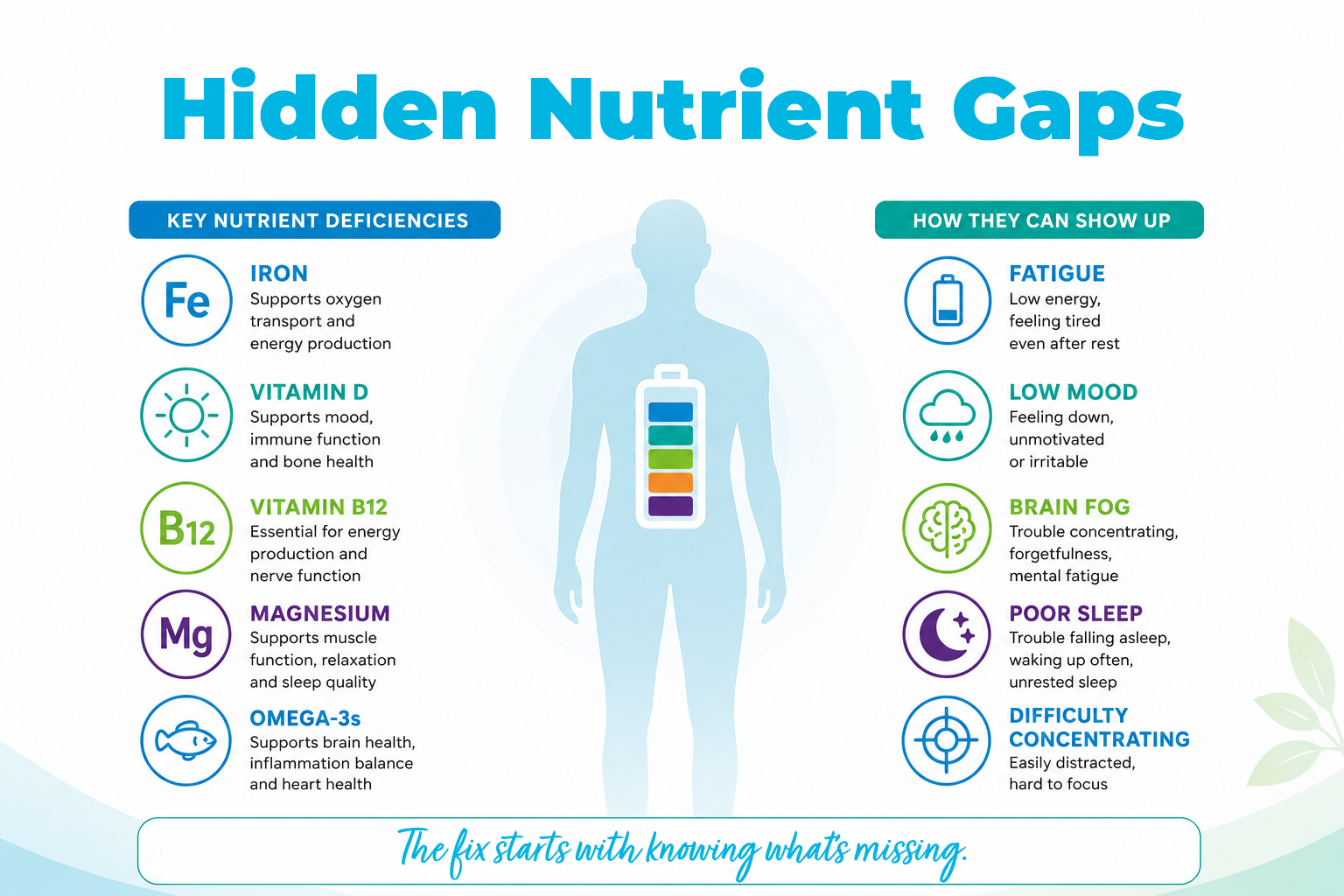
 You eat pretty well. You get some sleep. You drink water. So why do you still feel tired all the time, kind of blah, and like your body is just… running slow?
The answer isn’t always stress, aging, or a busy schedule. Sometimes, low energy, brain fog, mood changes, and a sluggish metabolism can be linked to nutrient deficiencies that often go unnoticed.
Hidden nutrient gaps don’t usually announce themselves with obvious warning signs. They don’t send you to the hospital or come with a dramatic diagnosis. Instead, they quietly affect how your body produces energy, regulates mood, supports metabolism, and performs everyday functions. Over time, even small deficiencies can leave you feeling less like yourself.
And they’re more common than you might think. Busy schedules, highly processed foods, restrictive diets, certain medications, and even chronic stress can make it harder to get the vitamins and minerals your body needs to thrive.
In this article, we’ll look at the most common nutrient deficiencies linked to fatigue, low mood, and metabolic changes, along with practical ways to identify potential gaps and support your overall health.
What Are Nutrient Gaps?
A nutrient gap is exactly what it sounds like: the difference between what your body needs and what you're actually getting. And no, you don't have to be eating fast food every day to have one.
The reality is that even people with decent diets can fall short on certain vitamins and minerals. Soil depletion has reduced the nutrient content of many crops. Busy schedules lead to skipped meals or repetitive eating patterns. High stress and caffeine habits increase how quickly your body burns through certain nutrients. And many common health conditions quietly drain your stores without you ever knowing.
According to the CDC, many American adults don't get enough of several key nutrients, including vitamin D, magnesium, and potassium, even when they think they're eating reasonably well.
The tricky part? The symptoms of most nutrient deficiencies are vague. Tired. A little anxious. Can't focus. Gaining weight even though nothing changed. These are easy to chalk up to stress, aging, or just "how you are," when in reality, your body may be running on fumes.
The Nutrient Gaps Wrecking Your Energy
Vitamin D
If there were a "most likely to be deficient" award, vitamin D would win it. Estimates suggest that around 42% of American adults are deficient, and the numbers are even higher in people who work indoors, live in northern climates, or have darker skin tones.
Vitamin D is technically a hormone, not just a vitamin, and it plays a role in hundreds of processes in the body. Low levels are strongly linked to fatigue, muscle weakness, and a general feeling of low energy that doesn't improve no matter how much you sleep.
The problem is that very few foods naturally contain meaningful amounts of vitamin D. Your body makes it through sun exposure, but for most office workers, that window is pretty small.
Signs your vitamin D might be low:
- Persistent tiredness even after a full night's sleep
- Bone or muscle aches
- Getting sick frequently
- Feeling down or unmotivated during the fall and winter months
Iron
Iron deficiency is one of the most common nutritional deficiencies in the world, particularly in women of reproductive age. Without enough iron, your blood can't carry oxygen efficiently. And when your cells aren't getting enough oxygen, everything feels harder.
Think brain fog. Think climbing one flight of stairs and feeling winded. Think that groggy, heavy feeling that hits by early afternoon.
It's worth noting that you can be low in iron without being officially anemic. Suboptimal iron levels, still technically "normal" on a standard blood panel, can still drag your energy down significantly.
B12
Vitamin B12 is essential for energy production, nerve function, and red blood cell formation. It's found almost exclusively in animal products, which means vegetarians and vegans are at high risk of deficiency. But it's not just a plant-based diet issue. B12 absorption declines with age, and common medications like metformin and proton pump inhibitors (PPIs) can also deplete it.
Low B12 can cause fatigue that feels different from normal tiredness. It often comes with tingling in the hands or feet, difficulty concentrating, and a kind of mental fog that just won't lift.
The Nutrient Gaps Affecting Your Mood
Magnesium
Magnesium is involved in over 300 biochemical reactions in the body. It helps regulate your nervous system, supports sleep quality, and plays a direct role in producing serotonin, the neurotransmitter most closely linked to mood and well-being.
Yet studies suggest that up to half of all Americans don't get enough magnesium from their diet. And stress, which depletes magnesium rapidly, makes this worse.
Low magnesium often shows up as anxiety, irritability, poor sleep, and a general sense of being wired but tired. If you find yourself lying awake at night with racing thoughts, magnesium is worth a closer look.
Omega-3 Fatty Acids
Omega-3s aren't technically a vitamin or mineral, but the gap between how much most people get and how much they need is significant enough to mention. These essential fats are critical for brain function and inflammation regulation. Low omega-3 levels have been linked to higher rates of depression, brain fog, and mood instability.
The average American diet is heavy in omega-6 fatty acids (found in vegetable oils and processed foods) and very light in omega-3s. That imbalance matters more than most people realize.
Foods high in omega-3s:
- Fatty fish like salmon, sardines, and mackerel
- Walnuts and flaxseeds
- Chia seeds
- Algae-based supplements (for those avoiding fish)
Folate (Vitamin B9)
Folate is well-known for its role in pregnancy, but it's also critical for mood regulation at every stage of life. It's involved in the production of neurotransmitters including serotonin, dopamine, and norepinephrine. A deficiency can contribute to depression, fatigue, and poor concentration.
Leafy greens, legumes, and fortified grains are the main dietary sources. People who drink alcohol regularly or have certain genetic variants (like MTHFR mutations) are at higher risk of being low.
The Nutrient Gaps Slowing Your Metabolism
Iodine
Your thyroid gland needs iodine to produce thyroid hormones, and your thyroid is basically the control center for your metabolism. Without enough iodine, thyroid function slows down. That means slower metabolism, weight gain, hair loss, fatigue, and difficulty regulating body temperature.
Iodized salt used to be a reliable source for most Americans, but as specialty salts (sea salt, Himalayan salt, kosher salt) have grown in popularity, many people are actually getting less iodine than they used to. Most of these trendy salts don't contain iodine.
Zinc
Zinc is involved in hormone production, immune function, and metabolic regulation. Low zinc levels can impair thyroid function, reduce testosterone (in both men and women), and slow the metabolism of carbohydrates and fats. It's also one of the first nutrients to take a hit during periods of high stress.
Chromium
Chromium is a trace mineral that helps insulin work more effectively. Without enough of it, blood sugar regulation becomes harder, which can lead to energy crashes, carbohydrate cravings, and over time, metabolic issues. It's not a nutrient most people think about, but it deserves more attention than it gets.
How to Know If You Have a Nutrient Gap
The only reliable way to know is to get tested. A standard blood panel doesn't always catch everything, so it's worth talking to your doctor about testing specific levels, especially vitamin D, B12, iron (including ferritin), magnesium, and thyroid function.
Not everyone faces the same risk of nutrient deficiencies. Certain lifestyle factors, health conditions, and life stages can make it harder for the body to get or absorb the nutrients it needs.
People at higher risk include:
Busy professionals who rely on convenience foods
Long workdays, travel, and packed schedules can make it difficult to consistently eat nutrient-dense meals. Even when calories are adequate, key vitamins and minerals may be lacking.
Adults over age 50
As we age, our bodies become less efficient at absorbing certain nutrients, including vitamin B12, calcium, and vitamin D.
People following restrictive diets
Vegetarian, vegan, low-carb, gluten-free, and other specialized eating patterns can be healthy, but they may require extra planning to avoid nutrient shortfalls.
Individuals with digestive conditions
Conditions such as Celiac Disease, Crohn’s Disease, and other gastrointestinal disorders can reduce the body’s ability to absorb nutrients.
People taking certain medications
Some medications can interfere with nutrient absorption or increase nutrient needs. Examples include acid-reducing medications, certain diabetes medications, and some blood pressure medications.
People with limited sun exposure
Many adults spend most of their day indoors, increasing their risk of low vitamin D levels.
Individuals experiencing chronic stress
Ongoing stress can affect eating habits, digestion, sleep quality, and overall nutrient status.
People trying to lose weight
Reducing calories can sometimes reduce nutrient intake as well, especially when diets eliminate entire food groups or rely heavily on processed “diet” foods.
What You Can Do About It
Start with food, then supplement strategically
Supplements are useful, but they work best as a backup to a solid diet, not a replacement for one. Focus first on getting more variety in what you eat. That means dark leafy greens, legumes, nuts and seeds, fatty fish, eggs, and whole grains. Cooking at home more often makes this easier because you control what goes in.
If you've been tested and confirmed deficient in something, supplementing makes a lot of sense. Just don't assume that buying every vitamin on the shelf will fix the problem. More isn't always better, and some nutrients compete with each other for absorption.
Reduce what depletes nutrients
Certain habits speed up nutrient depletion. Alcohol, high stress, excessive caffeine, restrictive dieting, and ultra-processed foods all deplete your stores faster than normal. You don't have to be perfect, but being aware of this helps.
Make it easier in the workplace
For HR and benefits managers, this matters on a larger scale. Employees who are running on nutrient-depleted fuel are going to struggle with focus, mood, and productivity, even when they're showing up and doing their best. Workplace wellness programs that include biometric screenings and nutrition education can make a real difference.
Small Nutrients, Big Impact
When energy is low, it’s easy to assume that’s just part of getting older, working long hours, or juggling a busy life. Sometimes that’s true. But sometimes your body is asking for something it isn’t getting.
Nutrient deficiencies rarely appear overnight. They often build slowly, showing up as fatigue, brain fog, mood changes, difficulty concentrating, or feeling like you’re running on empty despite your best efforts.
But small changes can make a meaningful difference. Eating a variety of nutrient-rich foods, paying attention to how you feel, and talking with your healthcare provider about potential deficiencies can help you uncover what might be holding you back.
You don’t have to settle for feeling tired all the time. Understanding your body’s nutrient needs is a simple but powerful step toward improving your energy, mood, metabolism, and overall quality of life.