
 TL;DR: A personalized calm kit filled with simple, healthy coping tools can help you feel more grounded and prepared when stress or anxiety shows up.
Most of us leave home with the essentials: phone, keys, wallet.
But what if you also carried a few things that helped you feel calmer during a stressful day?
That's the whole idea behind a calm kit. Picture a small stash of items in your bag, your desk drawer, or your car console, ready to help you reset the moment stress starts creeping in. You may have also seen these referred to as "panic pouches" or "anxiety pouches," names that have picked up steam on social media and in recent news coverage. Whatever you call it, the concept itself is surprisingly practical: instead of waiting until you're overwhelmed, you prepare for stressful moments ahead of time.
Think of it like a first-aid kit, but for your emotions instead of your cuts and scrapes.
Below, we'll cover what a calm kit actually is, why it works, and how to build one that fits your life, whether that's a hectic office, a long commute, or a house full of kids.
What Is a Calm Kit?
A calm kit is a small, portable set of items designed to help you regulate stress in the moment. It's not therapy, and it's not a replacement for professional support if you're struggling. It's more like a toolbox for the everyday stress that builds up during a busy day: a tense meeting, a long line, a hard conversation, a moment where your chest feels tight and your thoughts start racing.
The items inside vary from person to person, but they usually target one or more of your senses (touch, smell, sound, sight, taste) since sensory input is one of the fastest ways to calm a stressed-out nervous system.
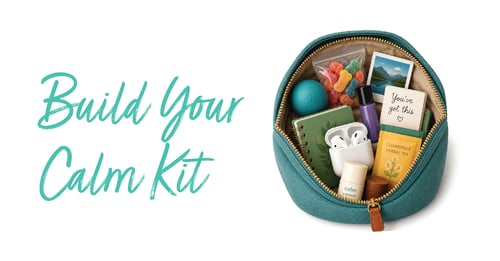
Common calm kit items include:
- A stress ball or fidget tool
- A small bottle of essential oil or a scented lotion
- Noise-canceling earbuds or a calming playlist
- A photo or small object that reminds you of a happy memory
- A piece of gum or a mint
- A short list of grounding phrases or affirmations
- A stress-relief supplement or herbal tea bag
Why Calm Kits Work
Stress doesn't always give you a warning. One minute you're fine, the next your heart is racing and your palms are sweaty. That's your body's stress response kicking in, and once it starts, it can be hard to think your way out of it.
This is where a calm kit earns its keep. Instead of trying to reason with a stressed-out brain, you're giving your body something physical to focus on. Squeezing a stress ball, smelling lavender, or listening to a familiar song can help slow your heart rate and pull your attention away from the spiral.
There's also a psychological benefit that has nothing to do with what's actually inside the kit. Knowing you have something to reach for, before you even need it, can lower your baseline anxiety. It's the same reason people feel safer just knowing where the fire extinguisher is, even if they never use it.
How to Build Your Own Calm Kit
1. Start With What Calms You Down Already
Before you buy anything, think back to the last time you felt calm after being stressed. Was it a smell? A song? A text from a friend? Your calm kit should be built around things that have already worked for you, not just what's trending online.
2. Pick a Container That Goes Where You Go
A calm kit only works if it's actually with you. A small zip pouch, a pencil case, or even a repurposed makeup bag all work well. Keep it in your bag, your car, or your desk drawer so it's within reach when stress hits.
3. Cover More Than One Sense
A kit built around a single sense (like smell alone) is helpful, but a kit that hits touch, smell, and sound at once tends to work faster. Aim for at least two or three sensory tools.
4. Add Something to Read
A short list of grounding statements, a favorite quote, or even a simple breathing exercise written on an index card can be one of the most useful things in the whole kit. When your mind is racing, having something to read and follow can slow everything down.
5. Keep It Small
A calm kit doesn't need to be elaborate. The goal is something you can grab in ten seconds, not something you have to dig through a bag to find. A few well-chosen items beat a dozen random ones.
6. Refresh It Occasionally
What works for you at 25 may not work at 45, and what helps during a stressful work week may not help during a stressful holiday season. Revisit your kit every few months and swap out anything that's stopped being useful.
How Employers Can Bring Calm Kits Into the Workplace
Building calm kits doesn't have to be something employees figure out on their own. It's an easy, low-cost wellness activity that employers can host, and it works well as a standalone event or as part of a broader mental health initiative.
1. Host a Calm Kit Building Station
Set up a table in the breakroom (or a designated wellness area) stocked with small, low-cost items: stress balls, tea bags, mints, lotion samples, notecards, small pouches or bags. Let employees stop by throughout the day to build their own kit. It's a simple activity that requires very little setup and gives employees something tangible to take back to their desk.
2. Turn It Into a Lunch-and-Learn
Pair the activity with a short presentation on stress management or the science behind sensory grounding techniques. Bring in a wellness coach or benefits provider to talk through why calm kits work, then let employees spend the rest of the session assembling their own.
3. Make It a Team Bonding Activity
Break employees into small groups and have each group research and recommend items for a "team calm kit" that stays in a shared space, like a breakroom or conference room. This turns an individual wellness activity into a collaborative one and gets people talking about stress management in a low-pressure way.
4. Offer It as a New Hire Welcome Gift
Starting a new job is stressful on its own. Consider putting together small calm kits as part of a new hire welcome packet, alongside company swag or a welcome card. It signals early on that your workplace takes employee well-being seriously.
5. Tie It to a Wellness Challenge or Awareness Month
Calm kit building pairs naturally with existing wellness initiatives, like a stress awareness campaign or a mental health awareness month. Use the activity as a kickoff event, then follow up throughout the month with related resources like guided breathing exercises or mindfulness tips.
6. Offer a Reimbursement or Stipend Option
If a hosted event isn't realistic for your team (say, for remote or hybrid employees), consider offering a small stipend or reimbursement so employees can build their own calm kits at home. Pair it with a short guide or email on what to include so remote employees don't feel left out of the activity.
Whatever format you choose, the goal is the same: give employees a proactive, hands-on way to manage anxiety and stress before it builds up, and show them that their well-being is something your company actually invests in.
Don't Wait Until You're Overwhelmed
The biggest benefit of a calm kit isn't really what's inside it. It's the mindset behind it: preparing for stress before it shows up, instead of scrambling to cope once it does.
Stress isn't going away. Deadlines, hard conversations, long commutes, and busy seasons are simply part of life and part of work. What changes is how prepared you are to meet those moments. A calm kit won't erase a stressful day, but it gives you a reliable, physical way to interrupt the spiral before it takes over, whether that's a two-minute breather at your desk or a quiet moment in the car before you walk into a meeting.
You don't need a perfectly curated kit to start. Grab a small bag, add two or three things that have calmed you down before, and keep it somewhere you'll actually see it. The next time stress creeps in, at home or at work, you'll already have something ready to help you reset.