
Editor Note: This article was updated in May 2026 to reflect the latest data and economic modeling.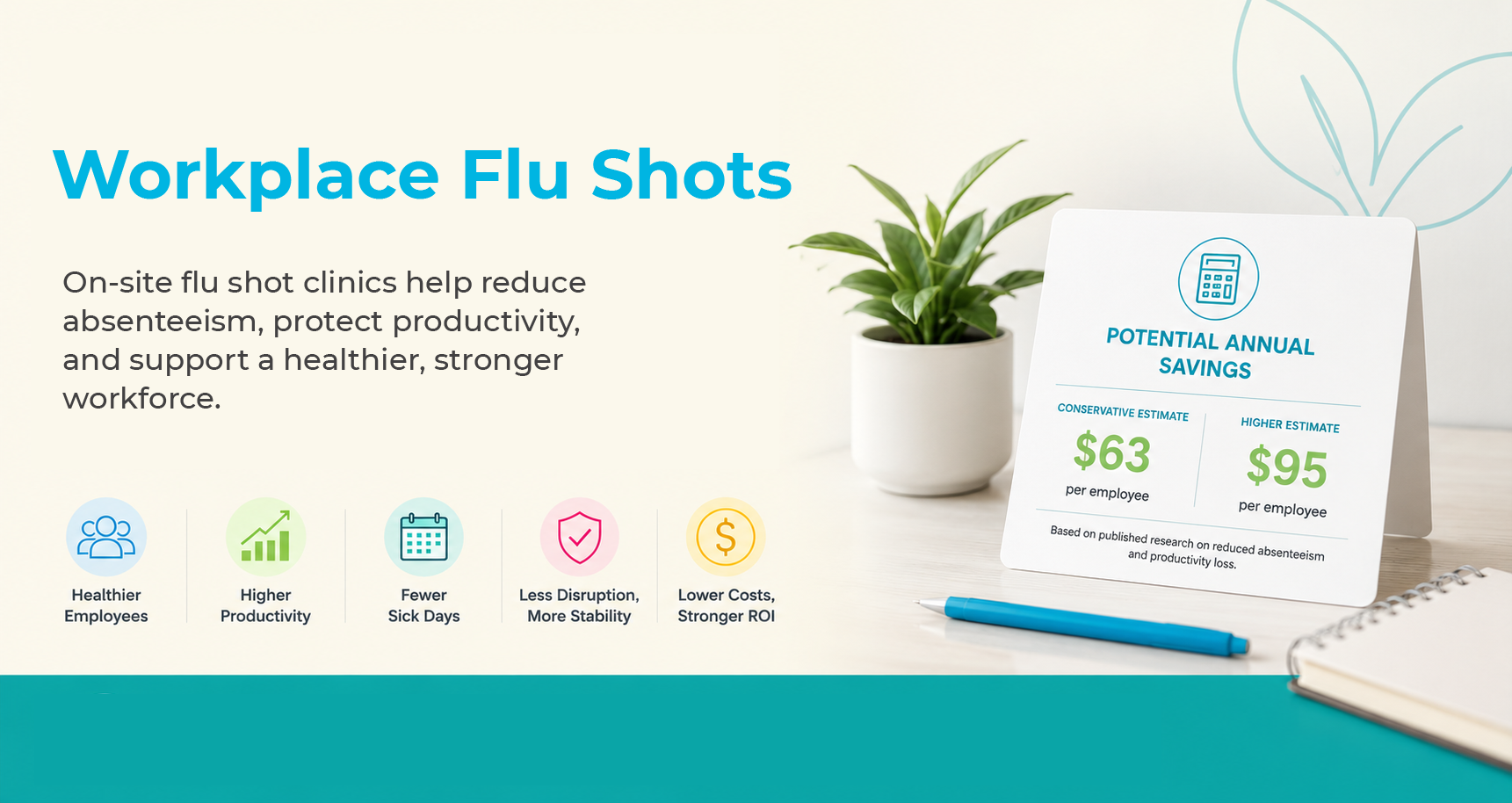
Every year, as the leaves start to change, HR leaders begin preparing for another busy season of workforce planning. Open enrollment deadlines, holiday schedules, staffing coverage, year-end goals, and employee wellbeing initiatives all start competing for attention. Somewhere on that list is another important decision: whether to offer workplace flu shots.
If you are on the fence about funding flu shots for your team this year, you might be looking at it purely as an expense. It is easy to see the upfront price tag of corporate wellness initiatives and wonder if the math truly adds up.
But when it comes to the flu, skipped vaccines cost far more than the clinics themselves. The return on investment (ROI) on flu shots is not just a theoretical wellness metric. It is a tangible financial benefit that protects your bottom line and your company culture.
Here is a breakdown of why workplace flu shots are one of the smartest investments your business can make this season.
The True Cost of the Flu on Business
To understand the financial return of a flu shot program, we first have to look at what happens when the flu hits an unprotected office.
Flu season rolls around every year between October and April. Because the virus is highly contagious, it can sweep through a department in a matter of days. Unlike a mild cold that an employee might push through with a box of tissues, the flu knocks people out completely.
An average uncomplicated case of the flu leaves a person feeling exhausted, running a high fever, and battling severe body aches. Research shows that up to 10% of unvaccinated adults catch seasonal influenza each year, with half of them developing full, disruptive symptoms. This translates to roughly three to seven days of intense illness, followed by up to two weeks of lingering fatigue and coughing.
When an employee gets the flu, your company loses money in several ways:
- Direct Absenteeism: Employees take multiple sick days to rest and recover, completely halting their daily output.
- Presenteeism: Workers who return too early are often too tired or foggy to perform their jobs effectively, leading to costly mistakes and low productivity.
- Spread of Illness: A single sick employee can pass the virus to coworkers before they even show symptoms, creating a domino effect across your teams.
- Overburdened Teams: When one person goes down, their workload falls on their teammates, leading to stress, burnout, and lower morale.
Calculating the Financial ROI
When you look at the hard numbers, the financial case for workplace flu shots becomes clear. The Centers for Disease Control and Prevention (CDC) and corporate wellness studies show that influenza costs US businesses billions of dollars annually in lost productivity and healthcare expenditures.
Consider the cost of a single flu shot versus the cost of a single sick day. A typical corporate flu shot costs a company a modest amount per employee. Typically between $36-40 per shot. On the flip side, losing an average employee for just two or three days costs hundreds of dollars in lost wages and productivity alone.
If your company covers the cost of the vaccine and saves just a handful of employees from getting sick, the program pays for itself. An observational study tracking workplace outcomes found that implementing a flu vaccination strategy reduced employee absences from work by 23% and decreased the total loss of working days by 30%.
The same study revealed a clear financial return, showing a baseline benefit-to-cost ratio of 4.2 This means that for every dollar or euro invested in the vaccine program, the organization saw over four times that amount returned in saved productivity and reduced absenteeism. Depending on the average cost of a working day, that benefit-to-cost ratio can climb even higher, ranging all the way up to 11.7.
Flu Shot ROI Calculator
See how much your organization could potentially save by offering workplace flu shots.
* Savings estimates are based on research evaluating employer cost reductions associated with decreased flu-related absenteeism and productivity disruption. Actual savings may vary based on workforce size, vaccination participation, flu severity, and workplace environment.
The Hidden Benefits: Beyond the Dollar Signs
While saving money on sick leave is a major win, the benefits of hosting an on-site flu shot clinic reach far deeper into your organization.
1. It Removes Barriers to Healthcare
Your employees want to stay healthy, but life gets busy. Finding the time to book an appointment, drive to a clinic, and wait in line after work is enough to make people put it off indefinitely. By bringing the vaccine directly to the office, you turn a weekend errand into a quick, five-minute task during the workday. Convenience is one of the most effective ways to increase participation in workplace flu vaccination programs.
2. It Creates a Barrier of Community Immunity
Vaccinated employees do more than just protect themselves; they act as a shield for the office. When a workplace achieves a high vaccination coverage of around 90%, it creates a powerful barrier that limits the spread of the virus, reducing the overall flu attack rate by up to 78%. This collective immunity protects your broader corporate community, including employees with underlying health conditions or those with vulnerable loved ones at home.
3. It Shows Your Team You Care
Employee wellness is a cornerstone of a healthy workplace culture. When a company proactively invests in preventive health measures, it sends a clear message to staff that their health and well-being are valued. This builds trust, boosts morale, and enhances employee retention.
Investing in a Healthier Season
At the end of the day, a business is only as healthy as its workforce. Sickness disrupts schedules, drains energy, and costs money.
Hosting a workplace flu shot clinic is a simple, cost-effective strategy that protects your employees and safeguards your operational budget. It is an investment that pays off in fewer sick days, higher productivity, and a happier, healthier team.