
TL;DR: You don’t need to spend a lot of money to feel your best. True self-care comes from small, consistent choices that support your body, mind, and mood. Here’s how to do it — affordably.
Most people don’t skip self-care because they don’t care about their health. They skip it because they’re tired, busy, stretched thin, and trying to make everything else work first.
When your day is packed with meetings, emails, errands, kids’ activities, and constant notifications, self-care can start to feel unrealistic. And somewhere along the way, wellness got marketed as something that requires money, time, and a perfectly organized morning routine.
But real life usually doesn’t look like that.
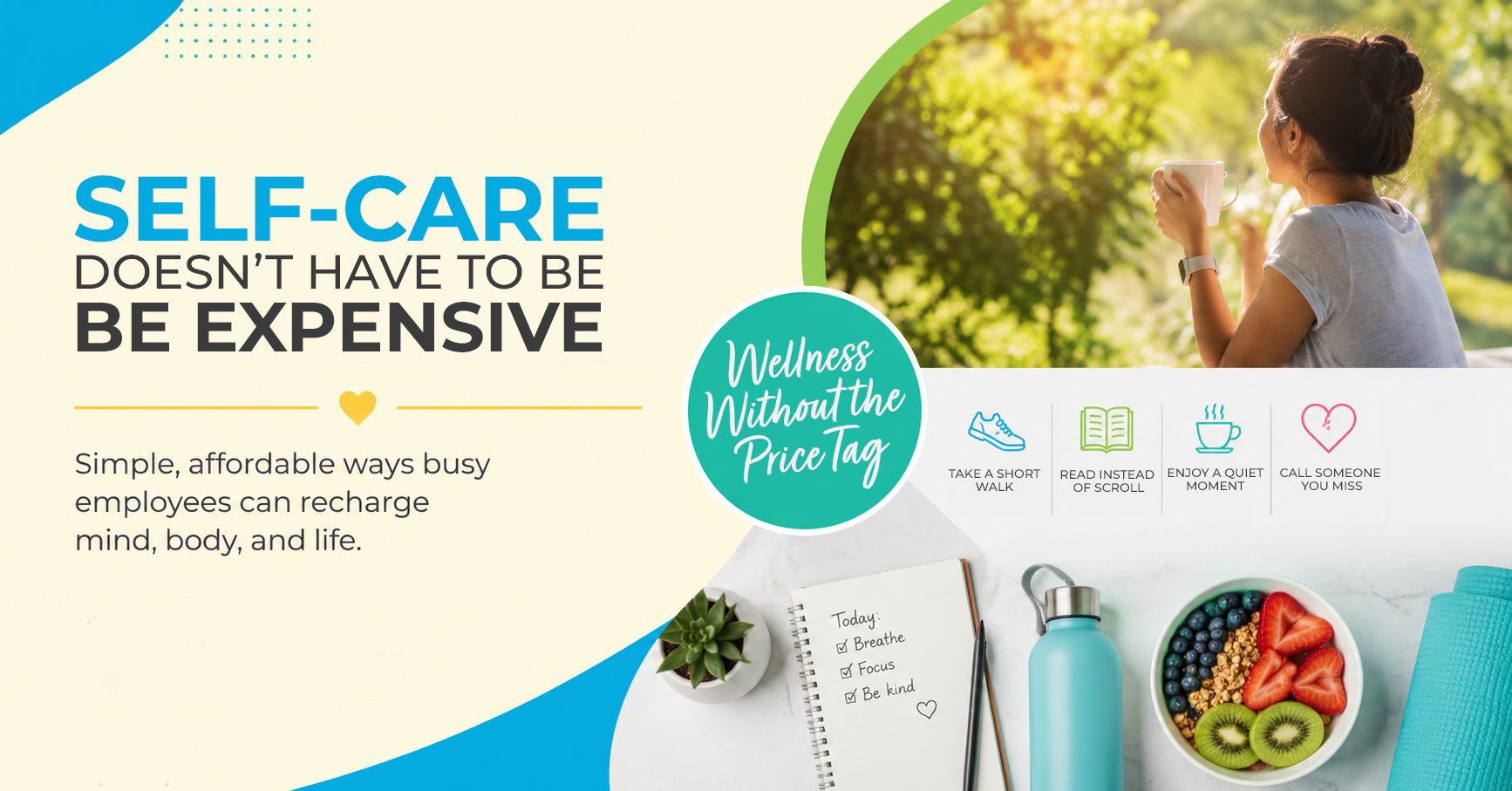
Taking care of yourself doesn’t have to mean expensive supplements, spa days, or another subscription you forget to use. Sometimes it looks like taking a walk after dinner, drinking more water during the workday, sitting outside for 10 minutes, or finally going to bed before midnight.
This post breaks down simple, affordable self-care ideas that actually fit into busy schedules and real budgets.
Why Self-Care Matters
Most people don’t burn out overnight. It usually happens slowly after weeks or months of running on stress, poor sleep, nonstop screens, and feeling like there’s never enough time to recharge.
And eventually, it catches up with you.
Research from the American Psychological Association shows chronic stress can affect focus, energy, sleep, mood, and overall health. The World Health Organization also recognizes burnout as a workplace issue tied to unmanaged stress over time.
The encouraging part is that small habits really can help. A Stanford University study found walking boosts creativity, while research from the National Library of Medicine links regular movement to lower stress and better mental wellbeing.
The key thing to remember is that self-care doesn’t have to be expensive or complicated to matter. Sometimes it’s as simple as getting outside for 10 minutes, drinking more water, texting a friend back, or finally taking a real lunch break.
Affordable Self-Care Ideas for Busy Employees
When people think of self-care, they often picture massages, new workout gear, or weekend getaways. But real self-care is about giving yourself what you need, not what you buy.
The good news? Most of what helps you recharge is completely free — things like fresh air, rest, laughter, and connection. These simple habits can help you feel calmer, healthier, and more grounded.
Recharge Your Body
Your body needs movement, rest, and fuel. All three are achievable without spending much.
Move your body for free:
- Walk, jog, or bike in your neighborhood
- Follow free YouTube workout videos (there are thousands of them)
- Use your lunch break for a quick stretch or walk around the building
- Try bodyweight workouts at home: squats, pushups, and lunges cost exactly nothing
Sleep is free, but most people underinvest in it. Prioritizing 7 to 9 hours of sleep per night is one of the highest-return wellness habits you can build. It improves mood, sharpens focus, and helps your body recover from stress.
Eat well without overspending:
- Meal prep simple, whole-food lunches to avoid vending machine splurges
- Swap one or two coffee shop drinks per week for coffee made at home
- Stock affordable, filling staples: oats, eggs, canned beans, frozen vegetables
Rehcharge Your Mind
Mental health matters just as much as physical health, and a lot of the most effective mental self-care strategies are completely free.
Try these low-effort, no-cost mental wellness habits:
- Breathwork: Even three slow, deep breaths during a stressful moment can lower your heart rate and help you reset.
- Journaling: A cheap notebook and five minutes a day can help you process stress and gain perspective.
- Gratitude practice: Writing down three things you're grateful for each morning is a simple habit with a big payoff.
- Setting boundaries: Saying no to one optional commitment a week protects your energy more than any wellness product ever could.
If you need more support, many employers offer Employee Assistance Programs (EAPs) that include free or low-cost mental health counseling. Check with your HR team to see what's available to you.
Recharge Your Relationships
Connection is a core human need. But socializing doesn't have to mean expensive dinners or activities.
Budget-friendly ways to stay connected:
- Schedule a coffee chat or walk with a coworker or friend
- Host a potluck instead of going out
- Call or text someone you haven't talked to in a while
- Join a free community event, class, or local club
Feeling connected to others reduces stress and helps combat the isolation that often comes with a demanding work schedule.
Recharge Your Attention
Constant notifications, emails, and social media scrolling drain your mental energy without you even noticing.
Try a simple digital detox practice to reclaim some mental breathing room:
- Set a "no phone" rule for the first 30 minutes after you wake up
- Turn off non-essential notifications during work hours
- Take a full evening off from screens once a week
It feels uncomfortable at first. But most people who try it report feeling noticeably calmer within a few days.
How to Actually Stick to Self-Care
Knowing what to do is the easy part. Actually doing it consistently is where most people get stuck.
A few tips that actually help:
-
Start small. Pick one habit and do it for two weeks before adding another.
-
Schedule it. If it's not on your calendar, it probably won't happen. Block time for self-care the same way you'd block time for a meeting.
-
Make it easy. The fewer obstacles between you and the habit, the better. Put your running shoes by the door. Keep your journal on your pillow. Set a phone reminder.
-
Give yourself grace. You'll miss days. That's normal. The goal is consistency over perfection.
Self-Care Is an Investment, Not a Luxury
Busy employees often feel like they don't have time for self-care. But the reality is that without it, everything else gets harder: work performance, relationships, mental health, and physical health.
The best part about self-care on a budget is that it shifts the focus back to what actually works. It's not about buying the right product. It's about building the right habits.
Start with one thing this week. A walk. An early bedtime. Five minutes of quiet before the day kicks off. Small actions, done consistently, are what actually move the needle.
Because caring for yourself is the most affordable investment you’ll ever make.