
Editor's Note: This article was updated in August 2026.
TL;DR: Workplace stress can affect employee health, focus, productivity and engagement. Employers can help by addressing workplace stressors, training managers and providing accessible well-being resources.
Workplace stress can affect more than an employee’s mood. Prolonged or poorly managed stress may influence sleep, concentration, physical well-being and the ability to perform work safely and effectively.
It can also affect the organization through reduced engagement, lower productivity, absenteeism and turnover. A wellness program can provide valuable support, but lasting improvement also requires employers to examine workload, communication, flexibility, management practices and other sources of workplace stress.
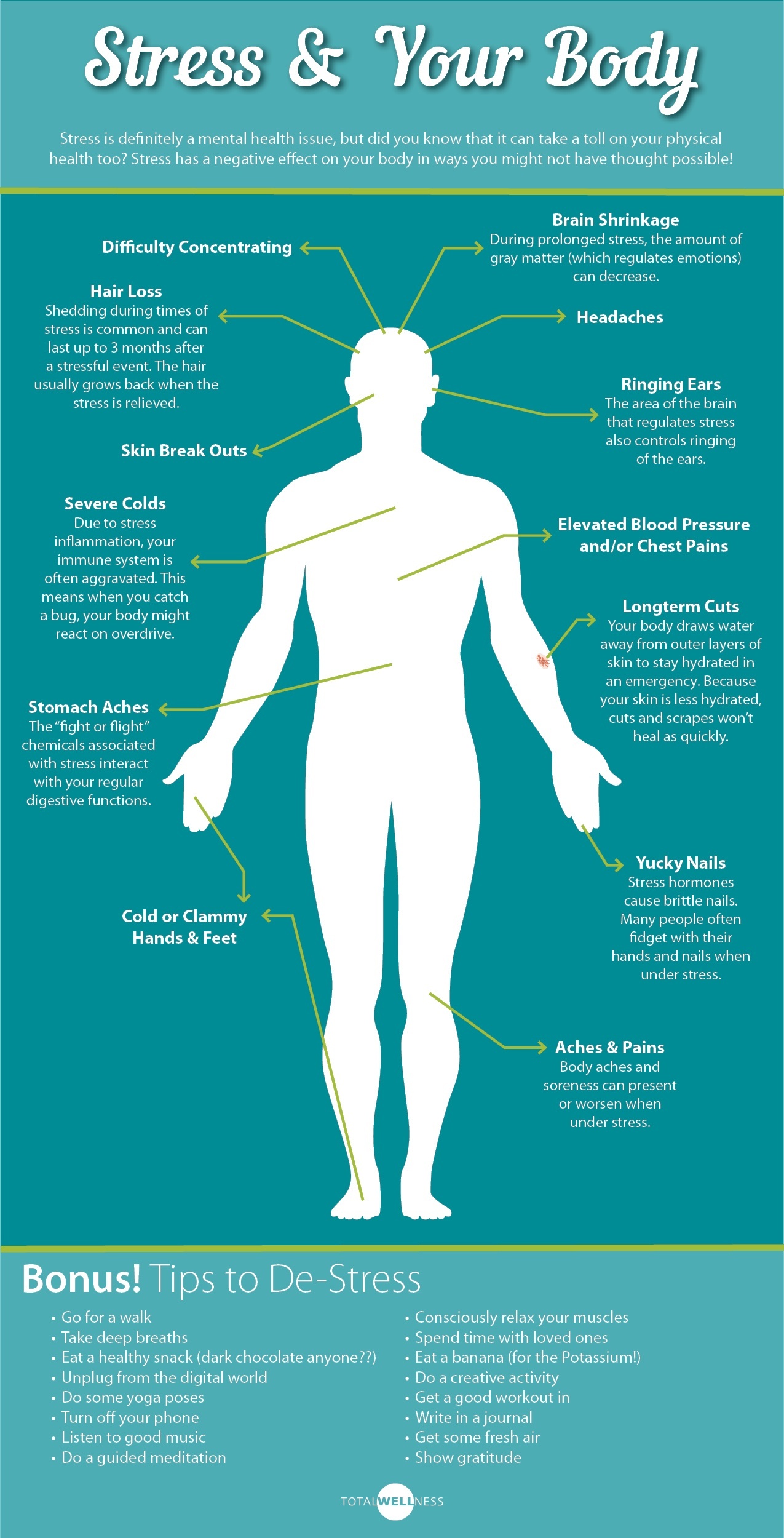
The infographic below illustrates how stress can affect the body. Afterward, we’ll explore common workplace stressors and practical steps employers can take.
How Workplace Stress Can Affect Employees and Organizations
Workplace stress can affect how employees feel, think and perform their jobs. The chart below highlights some of its potential effects on employee well-being and the organization.
| Employee effects | Organizational effects |
|---|---|
| Difficulty concentrating | Reduced productivity |
| Irritability or anxiety | Lower engagement |
| Sleep disruption and fatigue | More absenteeism |
| Headaches or muscle tension |
Communication problems |
| Feeling overwhelmed or powerless |
Increased turnover risk |
| Difficulty completing tasks | Greater risk of errors or injuries |
What Causes Stress at Work?
Workplace stress can occur when job demands exceed the resources, support or control available to an employee. It is different from a manageable challenge, which may motivate someone to learn or achieve a goal.
Stress is not caused only by an employee’s ability to cope. Workload, unclear expectations, inadequate staffing, lack of flexibility, poor communication and limited manager support may all contribute.
Common workplace stressors include:
- Excessive or unpredictable workloads
- Unclear responsibilities
- Inadequate staffing or resources
- Limited control over how work is completed
- Poor communication
- Lack of recognition or support
- Workplace conflict, harassment or discrimination
- Long or inflexible working hours
- Job insecurity
- Difficulty balancing work and caregiving responsibilities
The most useful way to identify stressors is to ask employees. Anonymous surveys, focus groups and manager check-ins can help employers understand which conditions are making work harder.
How Does Workplace Stress Affect the Body?
Stress activates the body’s response to a perceived demand or threat. In the short term, that response can increase alertness. When stress is prolonged or recovery is limited, employees may experience effects such as:
- Headaches
- Muscle tension
- Digestive discomfort
- Difficulty sleeping
- Fatigue
- Irritability
- Anxiety
- Trouble concentrating
- Changes in appetite
- Feeling overwhelmed
These experiences can have many causes. Employees with persistent, severe or concerning symptoms should consult an appropriate healthcare professional.
How Does Stress Affect Employee Performance?
Workplace stress can make it harder to concentrate, communicate, make decisions and complete tasks. It may also contribute to disengagement, absence and turnover.
The World Health Organization notes that poor mental health can affect productivity, performance, safe work and an individual’s ability to remain employed.
Avoid promising that one stress initiative will produce a specific financial return. Results depend on the workforce, program, implementation and workplace conditions.
What Can Employers Do to Reduce Workplace Stress?
Employers should begin with working conditions rather than placing the entire responsibility on employees.
Effective actions may include:
- Ask employees what is creating stress. Use confidential surveys, listening sessions and regular check-ins.
- Review workloads and staffing. Determine whether expectations are realistic and whether employees have adequate time and resources.
- Clarify roles and priorities. Employees should understand what is expected, which tasks matter most and where to get help.
- Train managers. Managers should know how to communicate clearly, recognize signs of distress and connect employees with available resources.
- Support appropriate flexibility. Flexible scheduling, leave and control over work may help employees manage competing demands.
- Create psychological safety. Employees should be able to raise concerns without fear of embarrassment or retaliation.
- Promote available benefits. Regularly explain how to access mental-health benefits, employee assistance programs and other resources.
- Measure progress. Track employee feedback, workload concerns, benefit awareness, absenteeism, engagement and turnover.
OSHA recommends addressing workplace stressors, building coping and resilience support, and ensuring employees know where to seek help.
What Role Does a Wellness Program Play?
A wellness program can support employees through:
- Stress-management education
- Mindfulness or relaxation sessions
- Movement and physical-activity opportunities
- Sleep education
- Manager resources
- Employee assistance program promotion
- Mental-health awareness campaigns
- Social-connection activities
- Information about available benefits
However, yoga classes and wellness challenges cannot compensate for chronic understaffing, excessive workloads or harmful management practices. Employee resources should complement — not replace — organizational improvements.
Common Questions About Workplace Stress
Workplace stress can affect employees and organizations in different ways. Here are answers to common questions about recognizing workplace stress, understanding its impact and creating a more supportive work environment.
What are common signs of workplace stress?
Possible signs include irritability, fatigue, sleep problems, difficulty concentrating, feeling overwhelmed and changes in work performance. These experiences may have many causes and should not be used by managers to diagnose an employee.
Can workplace stress affect productivity?
Yes. Workplace stress may make concentration, decision-making, communication and task completion more difficult. It may also contribute to absence, disengagement and turnover.
Who is responsible for managing workplace stress?
Employees can use healthy coping strategies and available resources, but employers are responsible for examining workplace conditions that may create unnecessary stress.
How can employers identify workplace stressors?
Confidential surveys, focus groups, manager conversations and reviews of workload, absence and turnover patterns can help reveal common concerns.
Can a wellness program reduce employee stress?
A wellness program can provide education and resources. It is most effective when paired with improvements to workload, management, communication, flexibility and workplace culture.
Building a Healthier, More Supportive Workplace
Managing workplace stress requires more than encouraging employees to relax. Employers should identify organizational stressors, listen to employee feedback and give managers the tools to respond effectively.
Wellness resources can strengthen that effort by making support easier to understand and access. Together, thoughtful workplace practices and relevant well-being programs can help employees feel supported and better equipped to manage everyday demands.