
BlogHeader-1


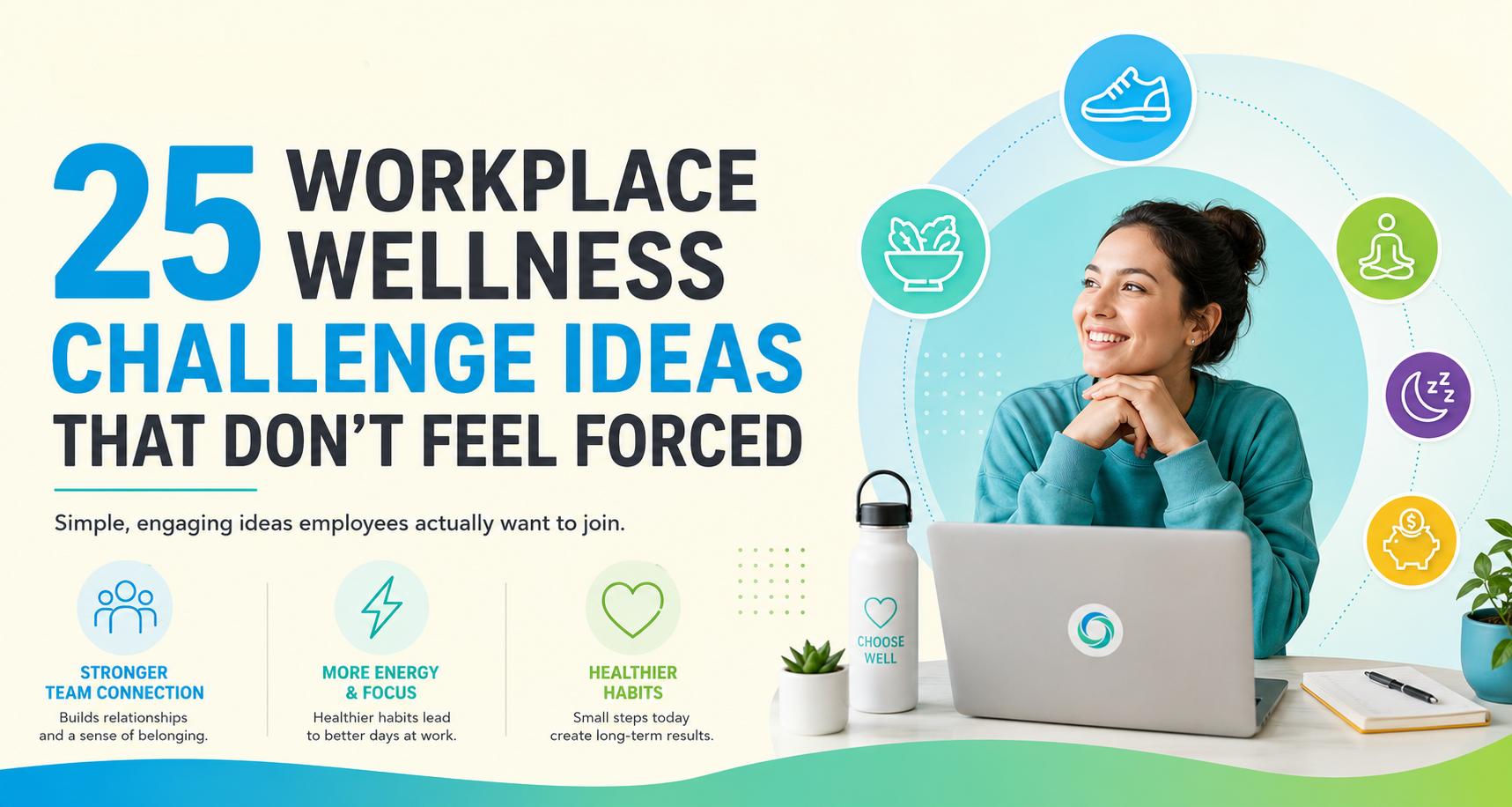
25 Workplace Wellness Challenge Ideas Employees Actually Want to Do

Posted by Lisa Stovall on Mon, Jun, 08, 2026

TL;DR: The best workplace wellness challenges are simple, fun, and easy to join. These 25 ideas can help employees build healthy habits, strengthen team connections, and create a more positive workplace culture.


Workplace wellness challenges have a reputation problem.

Many employees have participated in challenges that sounded great at first but quickly became another task on an already full to-do list. Maybe it was a step challenge that lost momentum after a week, a hydration tracker that nobody remembered to update, or a wellness app that employees downloaded once and never opened again.

The problem isn’t that people don’t care about their health. Most employees want more energy, less stress, and healthier habits. The problem is that too many wellness challenges feel disconnected from real life.

When wellness challenges are simple, social, and genuinely enjoyable, participation changes. Employees start talking about them, encouraging one another, and building healthy habits that extend beyond the challenge itself. The result is more than better health. It can lead to stronger team connections, improved morale, reduced burnout, and a workplace culture people enjoy being part of.

If you’re looking for fresh ideas, you’re in the right place. Below are 25 workplace wellness challenge ideas that are easy to launch, fun to join, and designed to create meaningful impact.
Read More

Topics: Healthy Workplaces

Affordable Ways to Take Care of Yourself

Posted by Lisa Stovall on Mon, Jun, 01, 2026

TL;DR: You don’t need to spend a lot of money to feel your best. True self-care comes from small, consistent choices that support your body, mind, and mood. Here’s how to do it — affordably.


Most people don’t skip self-care because they don’t care about their health. They skip it because they’re tired, busy, stretched thin, and trying to make everything else work first.

When your day is packed with meetings, emails, errands, kids’ activities, and constant notifications, self-care can start to feel unrealistic. And somewhere along the way, wellness got marketed as something that requires money, time, and a perfectly organized morning routine.

But real life usually doesn’t look like that.

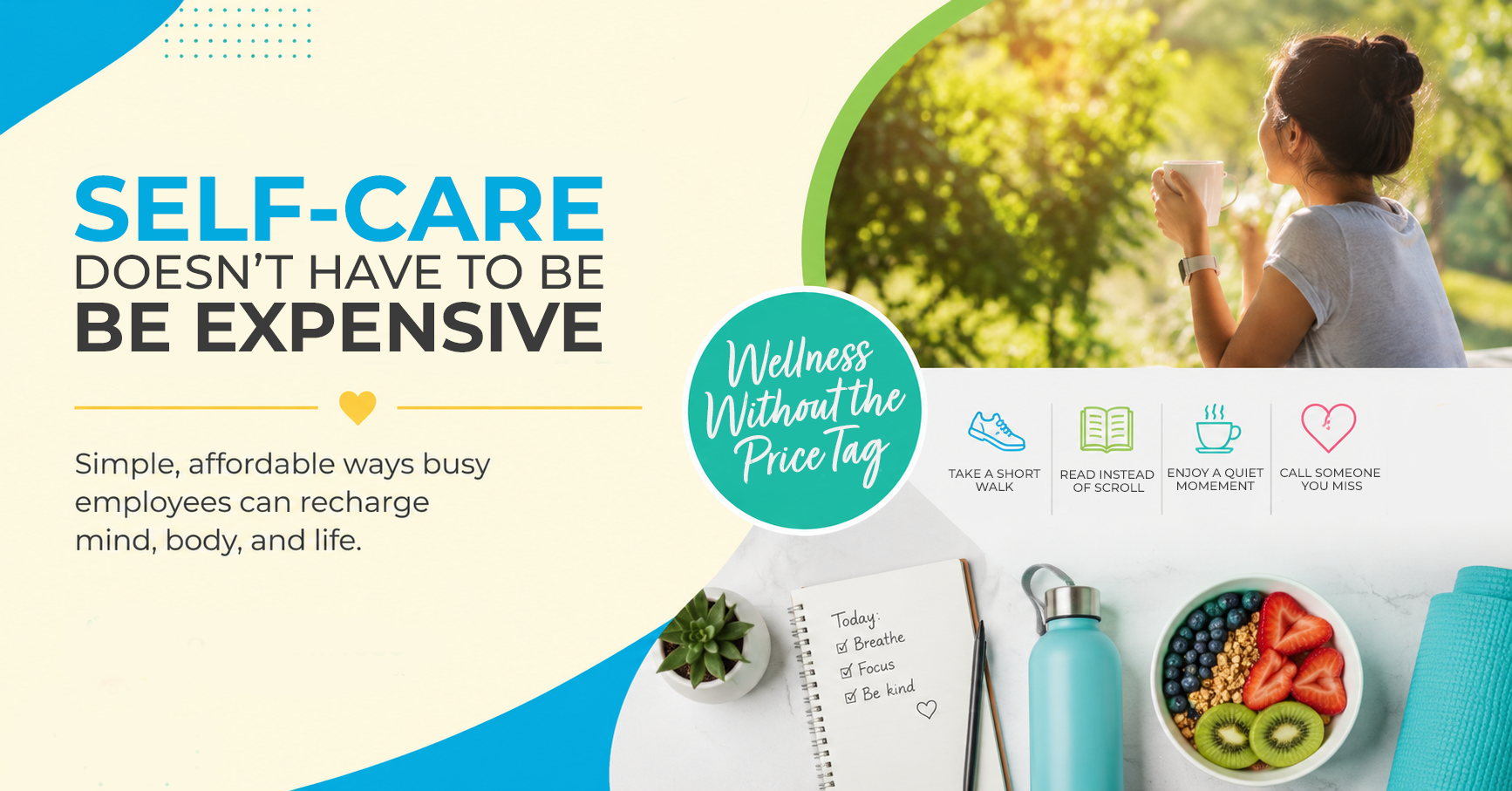
Taking care of yourself doesn’t have to mean expensive supplements, spa days, or another subscription you forget to use. Sometimes it looks like taking a walk after dinner, drinking more water during the workday, sitting outside for 10 minutes, or finally going to bed before midnight.

This post breaks down simple, affordable self-care ideas that actually fit into busy schedules and real budgets.

Read More

Topics: Healthy Workplaces

The Anticipation Effect: Why Looking Forward to Something Matters

Posted by Lisa Stovall on Tue, May, 26, 2026

TL;DR: Having something to look forward to may be one of the most overlooked mental health tools in the workplace. Research shows anticipation can boost mood, increase motivation, reduce stress, and help people feel more hopeful and energized. Employers can support employee wellbeing by helping people create more meaningful moments inside and outside of work.


There’s a reason summer often feels lighter.

It’s not just the sunshine or warmer weather. It’s the feeling that something good is coming.

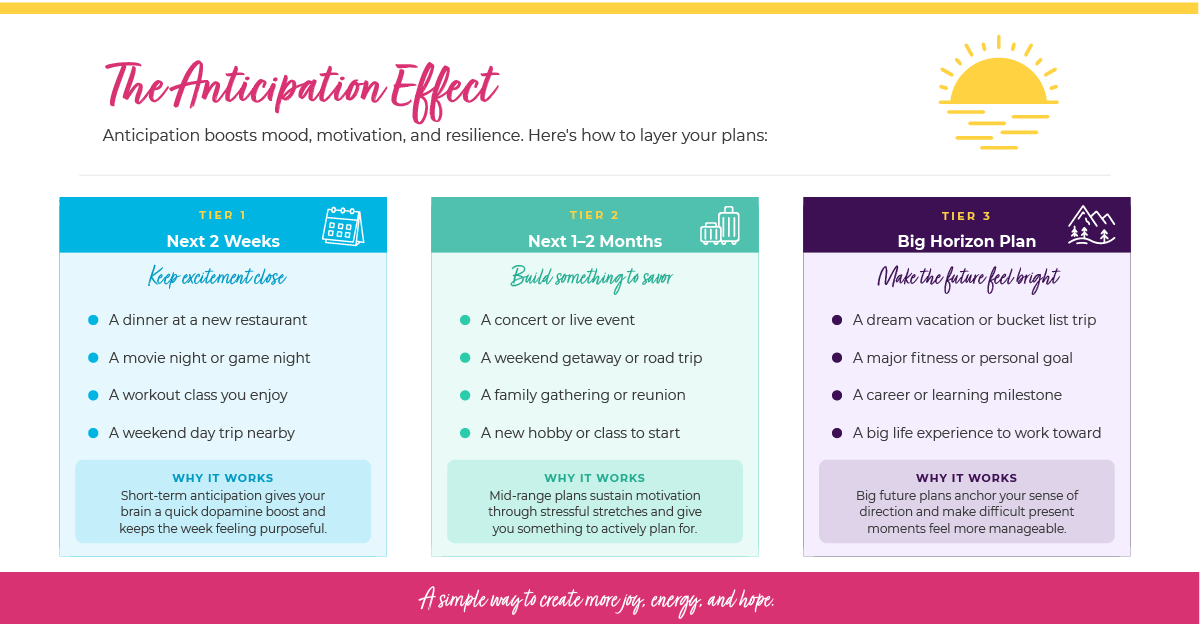
A weekend trip. A concert. A baseball game. A family barbecue. Even something small like meeting a friend for ice cream after work.

These moments matter more than we think.

In fact, research suggests that anticipation itself can improve mental wellbeing. Looking forward to something creates positive emotion before the event even happens. It gives the brain a sense of hope, momentum, and emotional energy.

And right now, many employees need more of that.

Read More

Topics: Healthy Workplaces

What Are the 4 Workplace Chronotypes?

Posted by Lisa Stovall on Mon, May, 18, 2026

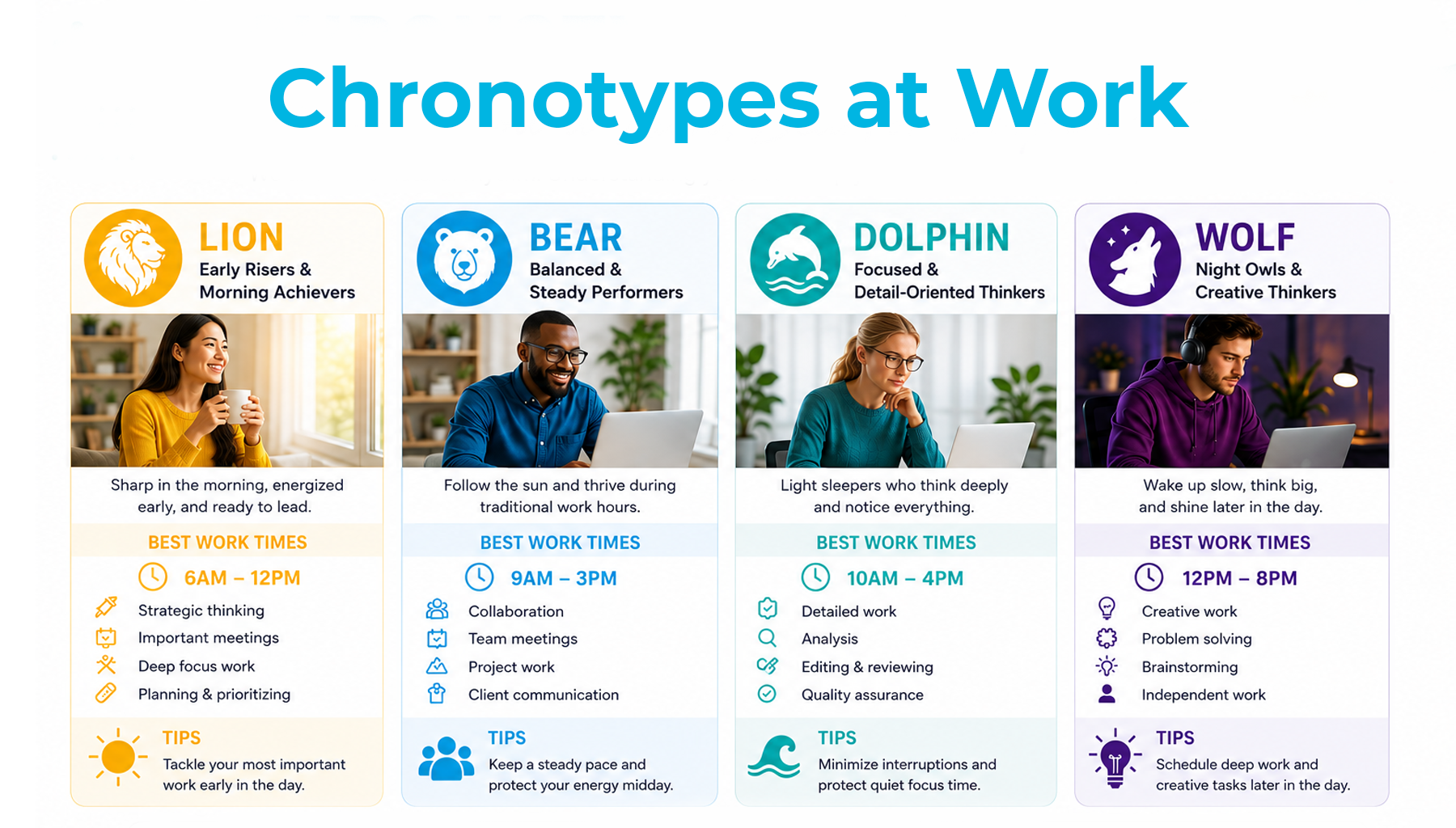
TL;DR: Not every employee works best at the same time of day. Some people are sharp at sunrise. Others hit their stride later in the afternoon. Chronotypes help explain these natural energy patterns. When companies understand them, they can improve focus, productivity, communication, and overall life quality at work.


Picture this: it’s 9:00 AM on a Monday. The office is buzzing, and back-to-back meetings are locked in. For some, it’s energizing; for others, it’s a productivity nightmare.

The difference may come down to chronotypes — your body’s natural, biologically driven preference for when you sleep, wake, focus, and perform at your best throughout the day.

Most people generally fall into four chronotype categories: Lions, Bears, Dolphins, and Wolves. Some thrive early in the morning, while others hit their peak energy much later in the day.

It’s not a personality quirk or a lack of discipline. It’s science. And when employers ignore it, they often end up with disengaged teams, sluggish output, and employees grinding through their most important work at exactly the wrong time.

This article explores the four workplace chronotypes and how understanding them can help organizations better support productivity, focus, and employee wellbeing.

Read More

Topics: Wellness at Work

When Did Fun Become Optional? A Guide to Reclaiming Your Joy

Posted by Lisa Stovall on Mon, May, 11, 2026

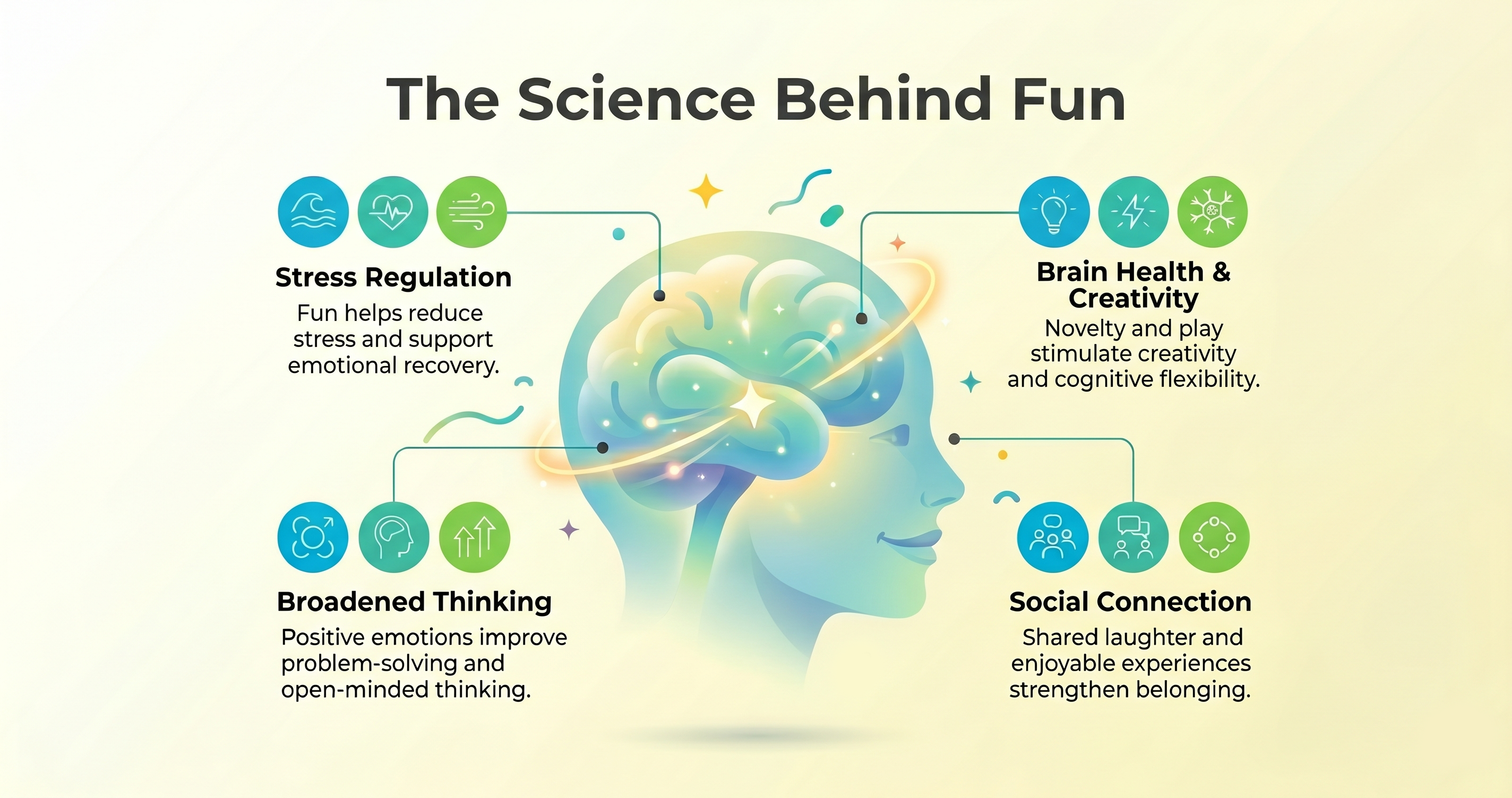
TL;DR: Fun is a biological necessity that reduces stress, boosts creativity, and strengthens social bonds. It’s not a distraction from wellness — it is the fuel that powers cognitive flexibility and emotional resilience.


Remember when fun used to happen naturally?

As kids, we didn’t schedule it, optimize it, or feel guilty about it. We played games in the driveway until the streetlights came on and laughed at ridiculous things. We explored, created, and tried new experiences simply because they sounded cool.

Somewhere between adulthood, responsibilities, and endless to-do lists, many of us quietly stopped treating fun like an important part of life. Instead, it became something extra. Something you earn only after the work is done or something that belongs on a vacation day when life calms down. Fun became optional because our culture began prioritizing productivity and problem-fixing over the genuine joy and play that actually support our mental health.

For many adults, life has turned into a cycle of productivity, recovery, and repetition. Wake up. Work. Handle responsibilities. Try to rest. Repeat. Even our well-being conversations focus almost entirely on fixing problems like burnout, sleep struggles, and exhaustion. While those are vital topics, there is often something missing from the conversation: real moments of enjoyment, connection, and curiosity.

Interestingly, research continues showing that these moments of fun may matter far more for our resilience and mental wellbeing than we realize.

Read More

Topics: Healthy Workplaces

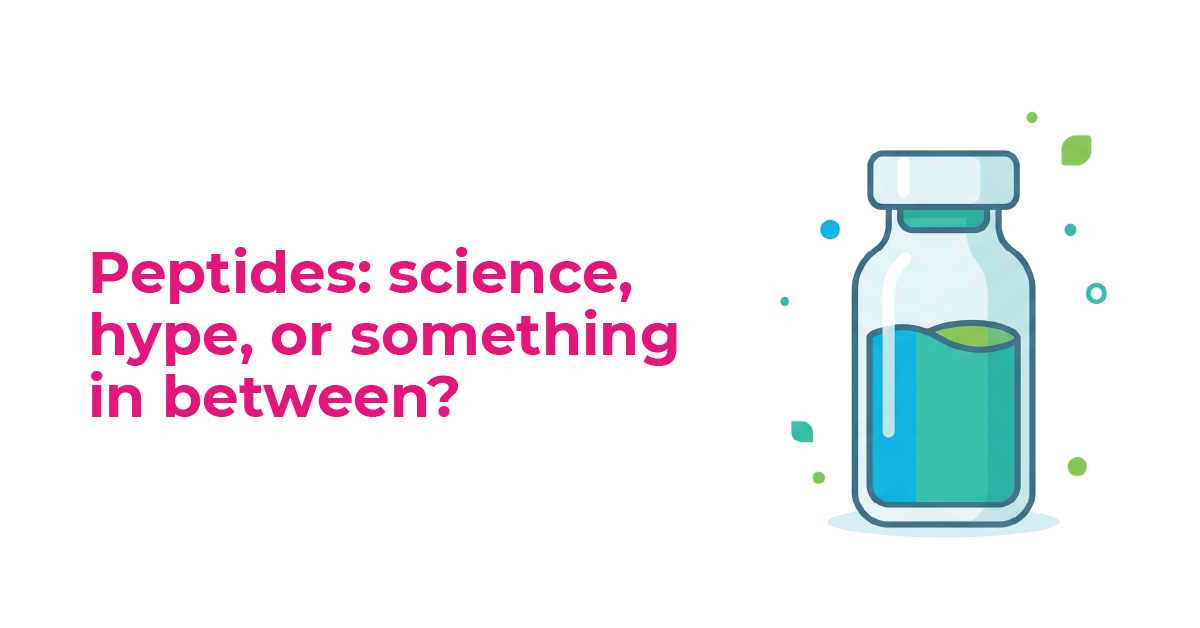
Peptides: What’s Proven, What’s Promising, What’s Unknown

Posted by Lisa Stovall on Mon, May, 04, 2026

TL;DR: Peptides are trending, but most lack real human evidence. Employees are paying attention — and sometimes experimenting — making this both a risk and an opportunity for employers to guide smarter health decisions.


Peptides are having a moment — and your employees are already paying attention.

Search interest is exploding. In January 2026 alone, peptide-related searches in the U.S. hit 10.1 million. About 60% of those were tied to GLP-1s for weight loss, but the curiosity doesn’t stop there. Millions more searches are focused on performance, recovery, and longevity. In fact, interest in anti-aging and metabolic health peptides has jumped nearly 300% year over year.

At the same time, social media is pouring fuel on the fire. The peptide hashtag has racked up hundreds of thousands of posts across platforms like TikTok and Instagram, with some videos pulling in millions of views. For employees scrolling between meetings or after hours, these trends aren’t abstract — they’re constant, compelling, and often persuasive.

What’s driving it? A simple idea: people want solutions that feel fast, effective, and within reach. When healthy habits like sleep, nutrition, and movement feel harder to sustain, the promise of a shortcut becomes incredibly appealing. Add in AI content and easy online access, and suddenly peptides start to look less like a niche medical topic and more like a mainstream wellness option.

For employers, this creates a new kind of challenge, and opportunity. As interest grows, so do the questions. What’s safe? What’s effective? What role, if any, should these treatments play in an employee wellness strategy?

Here is a straightforward breakdown.

Read More

Topics: Wellness at Work

Why Employees Don't Use Wellness Benefits

Posted by Lisa Stovall on Mon, Apr, 27, 2026

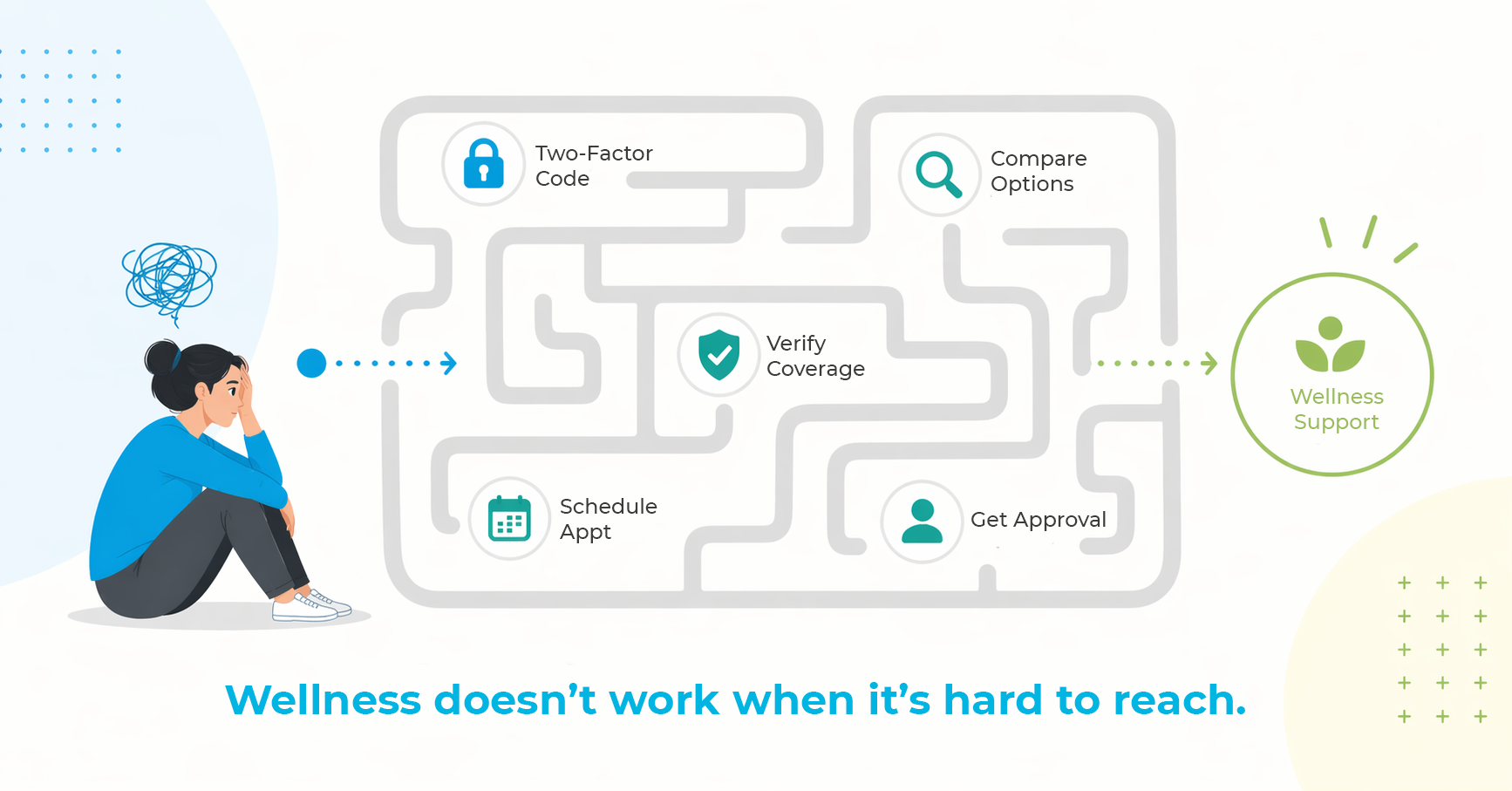
TL;DR: Employees don’t ignore wellness benefits because they don’t care — they don’t use them because they’re too hard to access. When someone is already stressed or low on energy, even a few extra steps are enough to stop them. If you want programs to work, make them simple, fast, and easy to use in the moment they’re needed.


You bought the shiny new wellness platform. You threw the virtual confetti in the company newsletter. You even sent that "Gentle Reminder" email with the login link (which we all know is HR-speak for please, for the love of everything, just click this).

And yet? The participation dashboard looks like a ghost town.

Sound familiar?

Here’s the reality: Most employees don’t ghost their wellness benefits because they’ve suddenly decided their health is "so last year." They skip them because the gap between “this benefit exists” and “I actually used it today” feels bigger than it should. 

The irony is cruel: When someone is teetering on the edge of burnout, asking them to decode coverage or navigate a complex portal isn't just a minor hurdle — it's an Everest-level climb. The employees who need these benefits the most are often the ones least equipped to hunt for them.

Here's a closer look at exactly where employees get stuck, and what HR leaders can do to fix it.

Read More

Topics: Wellness at Work

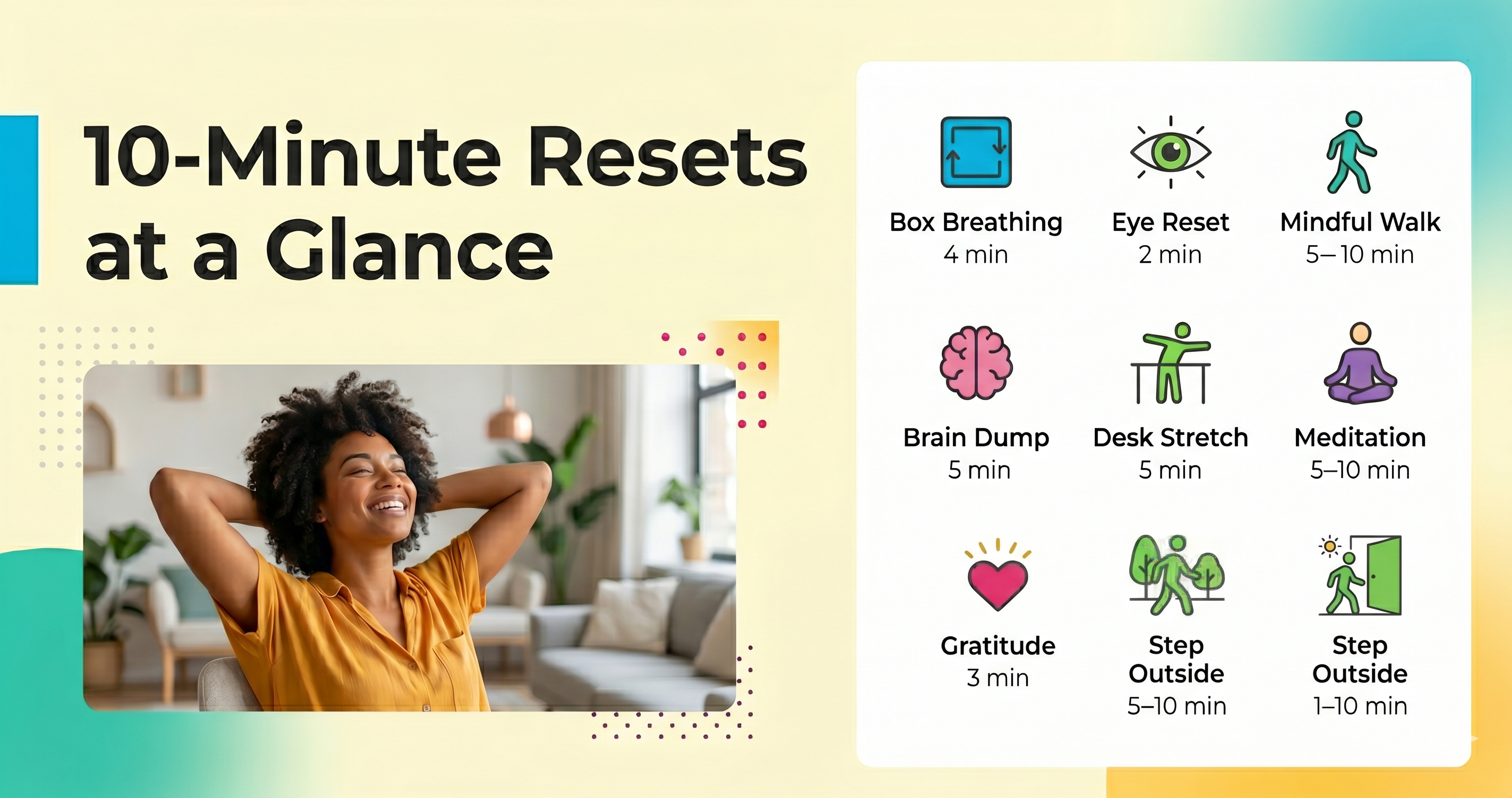
How to Reset Your Brain in 10 Minutes (Even on a Busy Workday)

Posted by Lisa Stovall on Mon, Apr, 20, 2026

TL;DR: Short on time but running on empty? These simple 10-minute resets help employees recharge between meetings, boost focus, and reduce stress without stepping away from their workday.


Back-to-back meetings. Deadlines piling up. Slack going off again before you’ve even finished the last message. It’s a lot. Most days just feel packed. There’s barely a gap to think, let alone step away and reset.

What does help is surprisingly simple. You don’t need a full break or a perfect window in your calendar. Just a few intentional minutes can change how you feel and how you think.

We’re talking 10 minutes. Sometimes less.

That’s enough to clear your head, take the edge off, and come back with a little more focus. Do it a couple times a day and it starts to add up in a real way.

So whether you’re trying to support your team or just get through your own schedule without feeling drained by mid-afternoon, this is for you. Below, we’ve rounded up the most effective 10-minute mental reset techniques that actually fit into a busy workday.

Read More

Topics: Healthy Workplaces

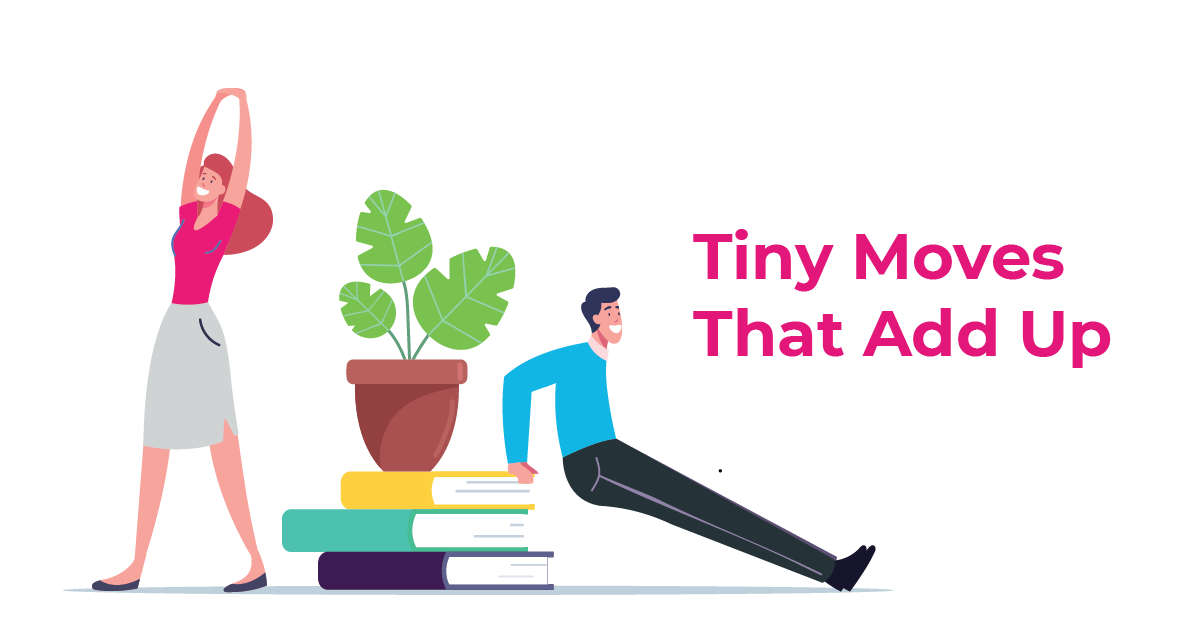
How to Stay Fit While Sitting at a Desk All Day

Posted by Lisa Stovall on Mon, Apr, 13, 2026


You know you should move more. Your body knows it. Your chair definitely knows it.

But your calendar? Not so much. 

Between back-to-back meetings and a never-ending inbox, it’s easy to feel like there’s no time or energy left for a workout. By the end of the day, the gym can feel like one more task instead of something that actually helps.

Sound familiar? The average office worker spends close to 10 hours a day sitting. Over time, that adds up, leaving both your energy and focus running low.

Here’s the shift: you don’t need to find an extra hour in your day. You just need to use the time you already have a little differently.

Research shows that breaking up long periods of sitting with short movement breaks can improve blood sugar, energy levels, and overall metabolic health.

Health experts are putting more focus on consistent, small moments of activity rather than relying only on longer workouts. Short walks, quick stretch breaks, a few minutes of movement between meetings— it all adds up and supports your overall health, energy, and focus.

No gym required. No major schedule changes.

Here's your practical, no-excuses guide to building fitness into your workday. One micro-habit at a time.

Read More

Topics: Wellness at Work

Your Spring Reading List: 10 HR Books to Inspire You

Posted by Lisa Stovall on Mon, Apr, 06, 2026

TL;DR: Looking for fresh ideas this spring? These 10 books challenge how we think about work — from culture and burnout to AI and inclusion — and offer practical ways to build better, more human-centered workplaces.


Spring has a way of waking things up. The light sticks around a little longer. The air feels easier. And suddenly, you start noticing what’s been on autopilot.

At work, that can show up in subtle ways. The meeting that could have been an email. The manager who’s quietly carrying too much. The culture that feels fine on the surface but a little disconnected underneath. It’s not broken, but it might be ready for something better.

That’s what makes this season such a powerful reset point. Not just for cleaning out closets or finally tackling your inbox, but for rethinking how work actually feels for the people inside it. Because when you zoom out, the question isn’t just “Are we doing enough?” It’s “Are we designing work in a way that helps people do their best, most meaningful work?”

Whether you’re an HR leader, a people manager, or someone who simply cares about building a better experience at work, the right idea at the right time can change everything. And sometimes, that idea starts with a book.

We’ve rounded up 10 reads that challenge old thinking, spark new ideas, and give you practical ways to build stronger teams, better cultures, and more human-centered workplaces.

Grab a coffee, find a sunny spot, and dig in.

Read More

Topics: Healthy Workplaces

EWBHeader

Subscribe

This Year's Most Popular Articles